
Home battery backup, Arizona
Battery backup for the next outage
Keep the fridge, the well pump, the medical equipment and the Wi-Fi running when the grid drops. Sized to your loads and installed by our own licensed crew.
4.9 stars from 13 Google reviews · ROC 357597, CR-11 Electrical
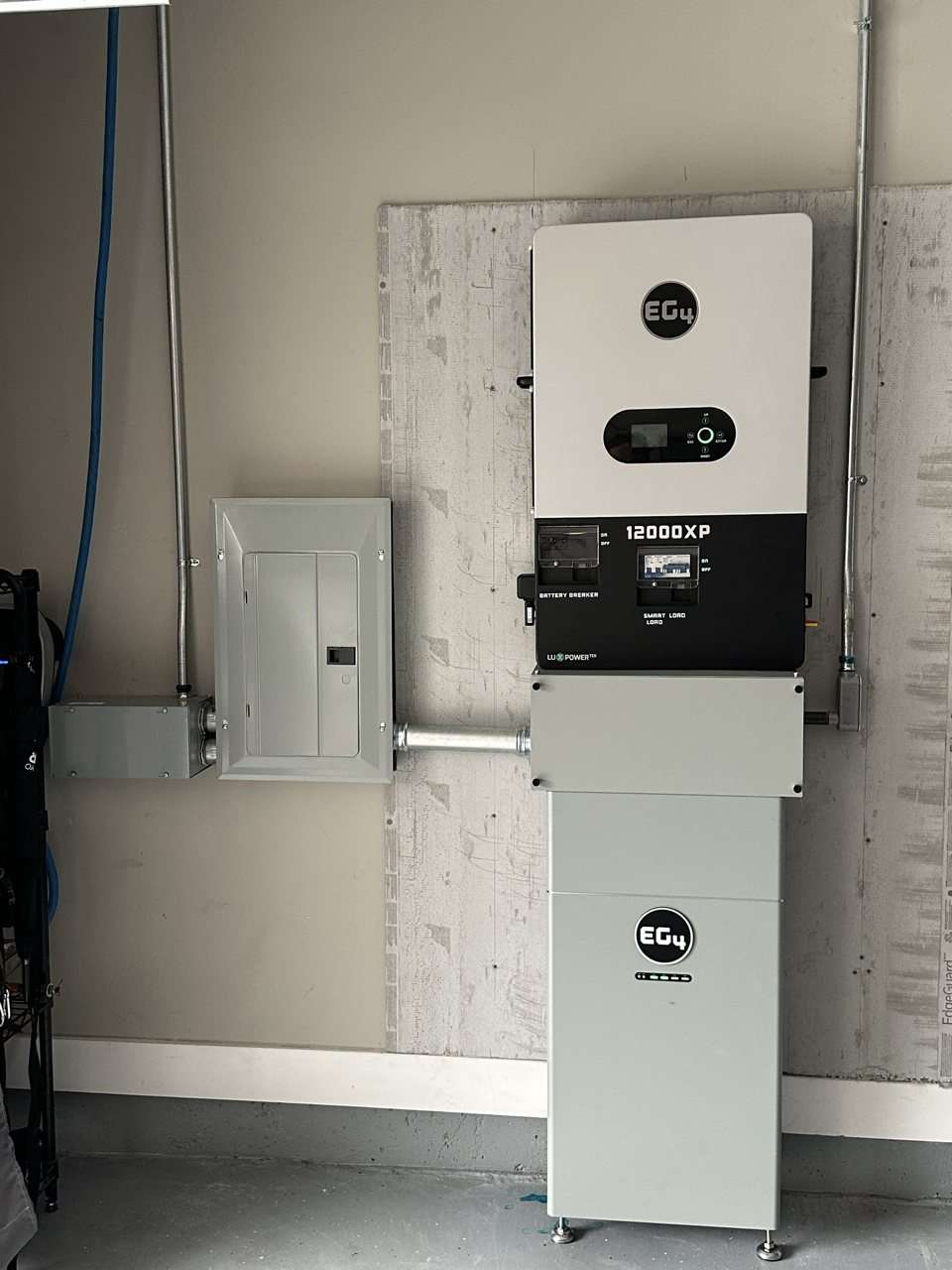
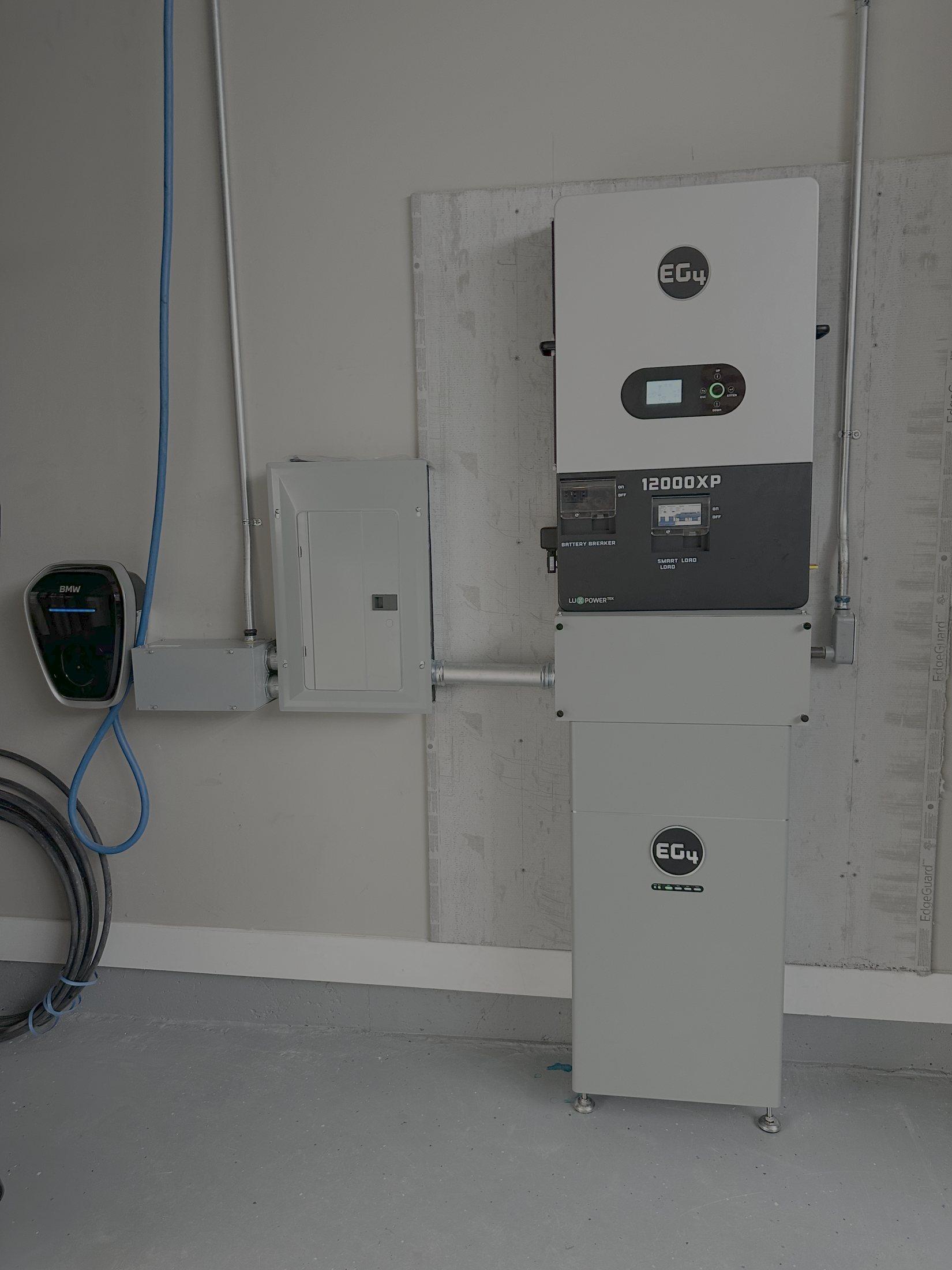
Nirvana Energy installs home battery backup systems across Arizona. We list the circuits you need during an outage, size the battery bank and inverter to carry them, and install a transfer setup so those circuits switch over on their own. Systems can charge from solar, from the grid, or both. Our CR-11 licensed crew pulls the permits and handles the utility paperwork.
Last updated · Reviewed by Nirvana Energy, ROC 357597
Start with what matters
Choose the circuits that must stay on
A backup system is only as good as the list behind it. Before we talk about equipment, we walk through your home and decide together which loads are critical.
Not sure where to start? Our guide on how to size a battery backup system walks through the math, and the runtime table below shows what common battery sizes carry.
- Refrigeration and food storage. The refrigerator and any chest freezer, the most common first item on every list.
- Water. A well pump or a booster pump, so the taps keep running on rural property.
- Medical and work equipment. Oxygen concentrators, CPAP machines, a home office and the network that ties it together.
- Comfort. Ceiling fans, a room air conditioner or a solar mini split for one cool room through a summer outage.
- Security. Garage door openers, cameras, gate motors and outdoor lighting.
Watch
How does a home battery backup system work?
A home battery backup system stores energy in a battery bank and feeds the circuits you chose through an inverter. When the grid drops, a transfer switch isolates your home and the inverter takes over, usually in moments. Solar panels, if you have them, refill the battery during the day so the backup lasts longer.
Runtime at a glance
How long does a home battery last in an outage?
Divide the battery's usable energy by the load it carries. A 13.5 kWh battery with about 90 percent usable carries a 475 watt essentials load (refrigerator, Wi-Fi, lights, fans and charging) for about a day. Add central air and it drops to a few hours. Solar recharging stretches every figure here.
| Loads kept on | Typical draw | 10 kWh | 13.5 kWh | 20 kWh |
|---|---|---|---|---|
| Essentials: refrigerator, Wi-Fi, LED lights, 3 fans, charging | 475 W | 19 h | 26 h | 38 h |
| Essentials plus a chest freezer and TV | 675 W | 13 h | 18 h | 27 h |
| Essentials plus a well pump | 725 W | 12 h | 17 h | 25 h |
| Essentials plus one mini split room | 1175 W | 8 h | 10 h | 15 h |
Estimates without solar recharging, at 90 percent usable capacity. Wattages are typical running figures; the U.S. Department of Energy explains the method on its appliance energy page. Try your own loads in the outage runtime calculator.
Three ways to set it up
Should I back up part of my home or the whole home?
Back up part of the home if you want the essentials covered at a lower cost: a dedicated panel carries the circuits you choose. Back up the whole home if central air has to run too, which takes a larger battery bank and inverter. Adding solar refills the battery every day, whichever you pick.
Partial home backup
A dedicated panel carries the critical circuits you chose. The most common choice for homeowners who want outage protection without sizing for central air.
Whole home backup
A larger battery bank and inverter carry the whole service, air conditioning included. Sized carefully around summer peaks and the length of outage you want to ride out.
Grid-tied solar with storage
Solar charges the battery every day, the battery covers the evening and any outage, and the grid stays connected as the backstop. Panels can be added now or later.
What we size
The numbers behind a backup system that works
| Battery capacity | How much energy is stored. Set by your critical loads and how many hours you want them covered without sun. |
|---|---|
| Inverter output | How much can run at once. Motors such as well pumps and compressors need a strong starting surge, so this matters as much as capacity. |
| Charging source | Solar, grid, a generator plug-in, or a combination. We install generator plug-ins for homes that want a third source. |
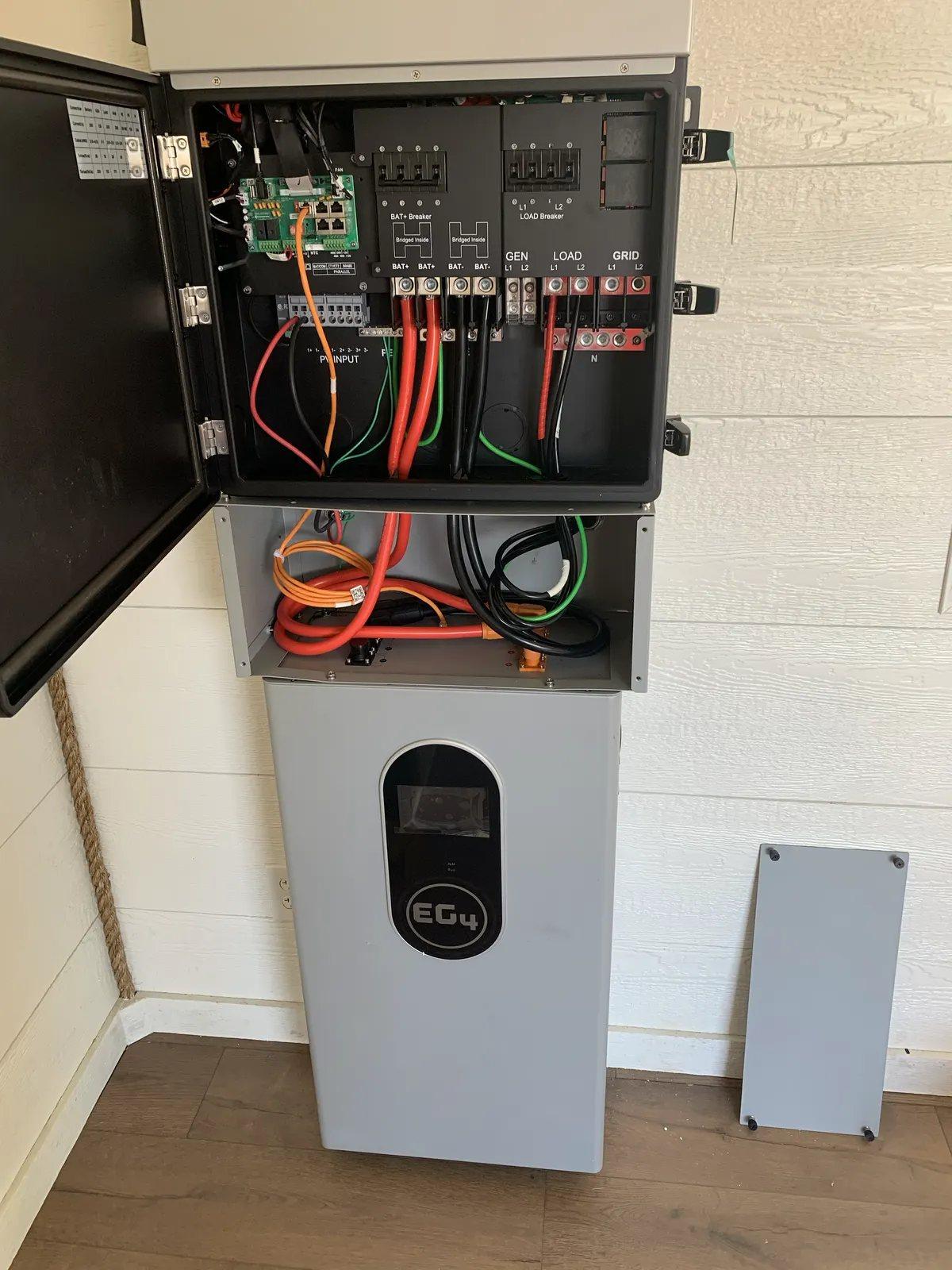
| Transfer setup | The equipment that isolates your home from the grid in an outage and moves the chosen circuits to the battery. |
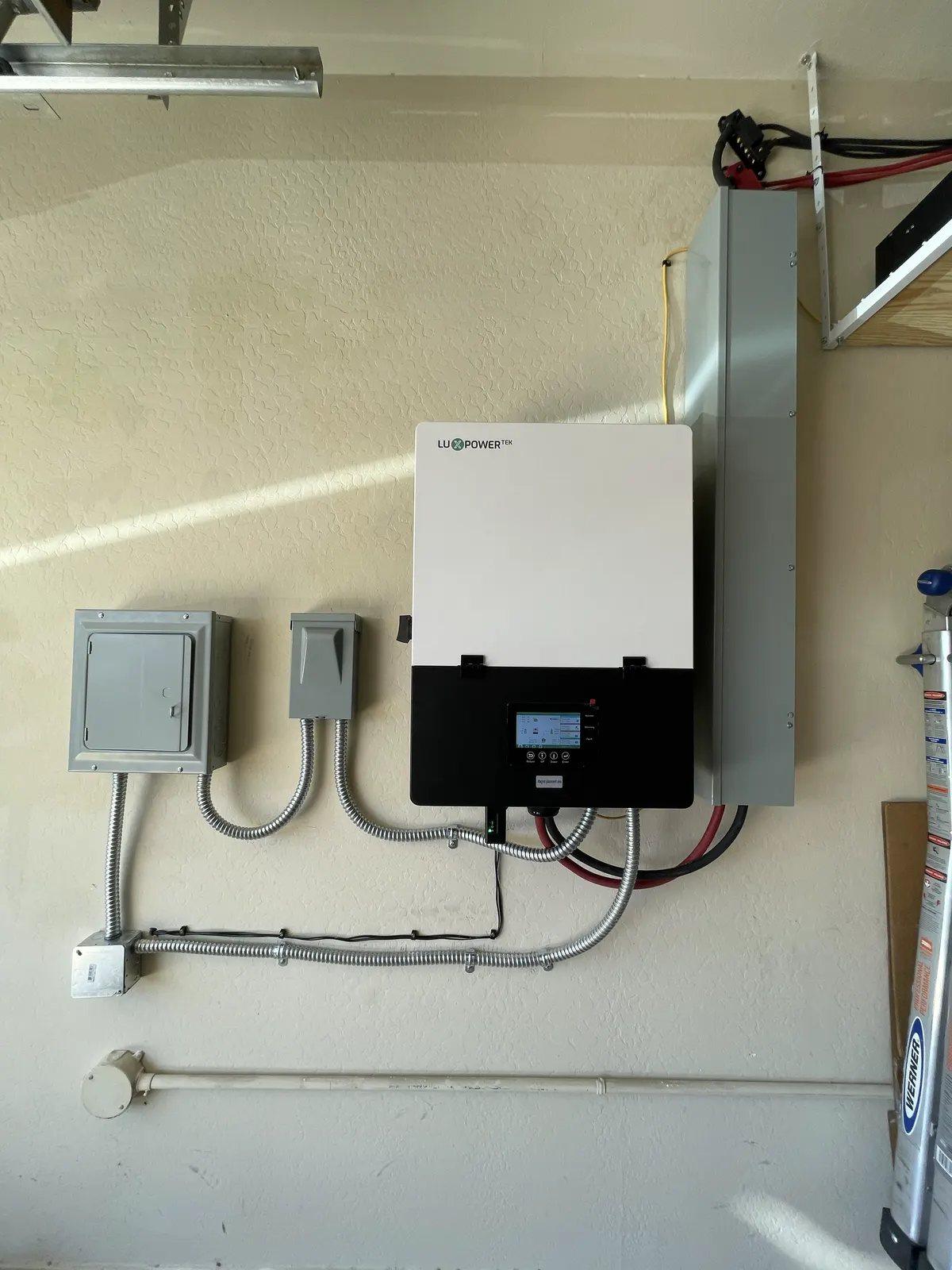
| Location | Garage wall, utility room or exterior pad. Arizona heat shortens battery life, so placement is part of the design. |
Every install carries a 2-year workmanship warranty on top of full manufacturer product guarantees. Want a starting point first? Use Build & Price.
Peace of mind during power outages
4.9 stars from 13 Google reviewsNirvana did an incredible job helping us set up a reliable battery backup system for our critical appliances, giving us peace of mind during power outages. Their team was professional, efficient, and made the entire process seamless.
Nirvana Energy was great from start to finish. Not only were they able to back up my critical appliances at home, but they also were able to take my cabin off grid as well. Very professional, great pricing and really helped me understand my options.
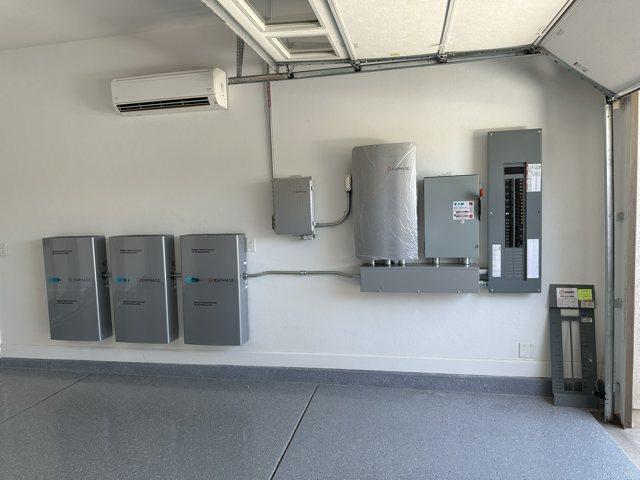
Pair it with solar or a mini split
A battery on its own covers outages. Add panels and it refills from the sun; add a solar mini split and one room stays cool without touching the battery at all. If you are on land without a utility line, see off-grid solar systems.
Questions
Battery backup questions
How long will a home battery run my house in an outage?
It depends on what you ask it to carry. A battery that runs a refrigerator, lights, Wi-Fi and a few outlets lasts far longer than one asked to run central air. That is why we start with your critical loads list and size the battery bank around it, then show you what each extra circuit costs in run time.
Can a battery backup system run my air conditioner?
It can, if the system is sized for it. Air conditioning is the largest load in most Arizona homes, so it drives the size of the inverter and the battery bank. Many homeowners choose a partial home setup for outages and add a solar mini split for a room that must stay cool.
Will I notice when the grid goes down?
With a properly installed transfer setup the backed-up circuits switch to the battery on their own. Most people notice the neighbors’ lights are out before they notice anything in their own kitchen.
Can I add batteries to the solar panels I already have?
Often, yes. We look at your existing inverter, panel and service equipment first. Some systems accept a battery directly; others need an inverter swap or a retrofit, which we also install.
Do you handle the permit and the utility?
Yes. Nirvana Energy pulls the permits and handles the utility paperwork, so the system is inspected and on record with APS, SRP or your local utility.
Free consultation, Arizona statewide
Find out what your home needs to stay on
Free consultation anywhere in Arizona. Tell us which circuits matter and a licensed electrician will size a battery system around them. We install anywhere in Arizona, from the Valley to remote land: see our Arizona service area.
4.9 stars from 13 Google reviews. Licensed and bonded in Arizona, ROC 357597.
Call (602) 704-4648Tell us what you want to power
Open Monday to Friday, 9 AM to 5 PM. The consultation is free anywhere in Arizona.