A backup generator runs as long as it has fuel and can carry a whole house, air conditioning included, but it is loud, needs fuel and maintenance, and must run outdoors. A home battery is silent, switches over without a pull cord and can work with solar every day, but it runs for a set number of hours. Many Arizona homes are best served by a battery on the critical circuits; long rural outages may call for both.
Key takeaways
- Generators win on duration, as long as fuel lasts. Batteries win on noise, fumes, daily use and maintenance.
- Safety rules are strict for generators. The CDC says never run one in a home or garage, and keep it at least 20 feet from windows, doors and vents.
- Every connection to house wiring needs transfer equipment so nothing backfeeds the utility line.
- Batteries pair with solar. The same battery that covers an outage can shift your evening use away from APS or SRP on-peak hours.
Table of contents
- How do a generator and a battery compare?
- Is a generator safe to use at home?
- Why do Arizona homes lean toward batteries?
- When does a generator still make sense?
- How big does a battery need to be to replace a generator?
- Can you combine a generator and a battery?
- What should you ask before choosing a generator or a battery?
- Compare both options for your home
- Frequently asked questions
How do a generator and a battery compare?
| Standby or portable generator | Home battery backup | |
|---|---|---|
| Runtime | As long as fuel lasts | Set by battery capacity and your loads |
| Noise and fumes | Engine noise and exhaust; outdoors only | Silent, no exhaust |
| Switchover | Automatic on a standby unit; manual on a portable | Automatic for the backed-up circuits |
| Everyday use | None; sits idle between outages | Stores solar or off-peak energy every day |
| Upkeep | Oil, filters, exercise runs, fuel supply | Little routine maintenance; mind the heat |
| Big loads | Can be sized for central air | Can be, but the system grows a lot |
Neither is right for every home. The deciding questions are how long your outages last, whether you need central air through them, and whether you also want lower bills from solar.
Is a generator safe to use at home?
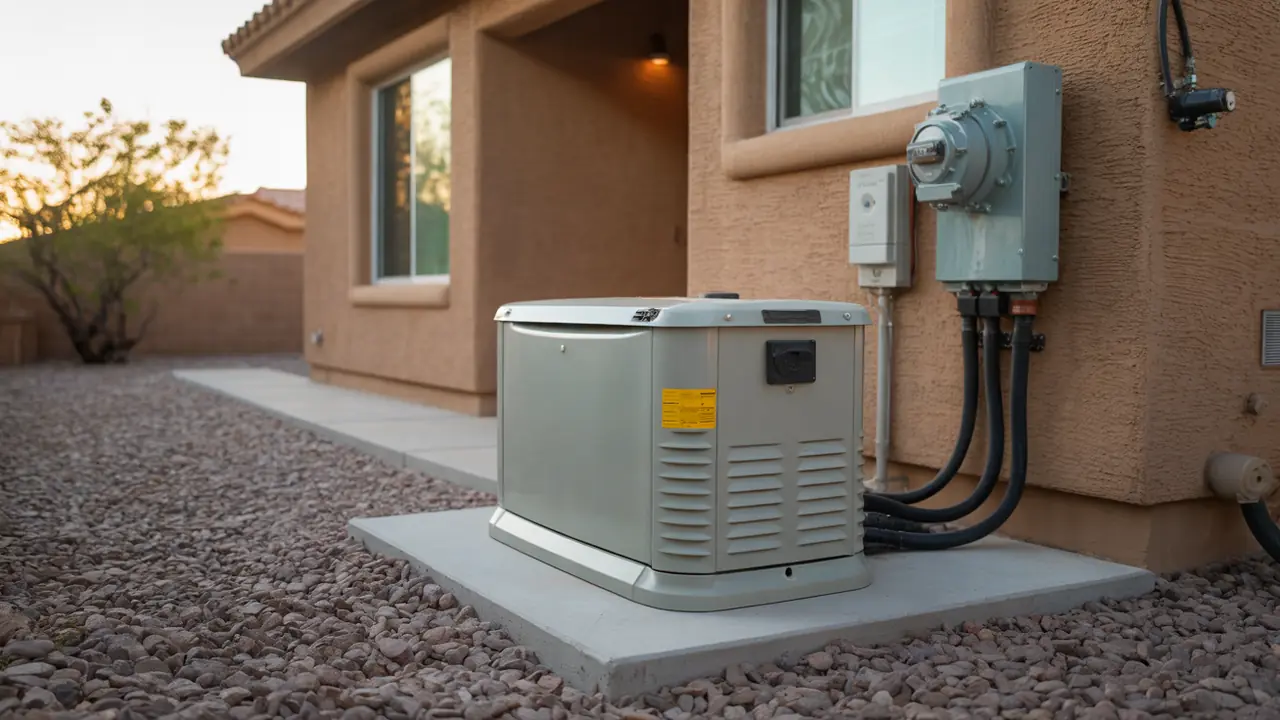
A generator is safe when it is installed and used by the rules. The CDC's power outage guidance says never use a generator inside a home, basement or garage, even with the doors open, and never less than 20 feet from a window, door or vent. Carbon monoxide is odorless and builds up fast; a battery-powered or battery-backup CO detector is a must.
The second rule is the connection. A generator that feeds house wiring must go through a transfer switch or an interlock so it can never energize the utility line while crews are working on it. The National Electrical Code, NFPA 70, sets the requirements for that transfer equipment, and a licensed electrician installs it. Plugging a generator into a wall outlet with a double-ended cord is never safe.
Why do Arizona homes lean toward batteries?
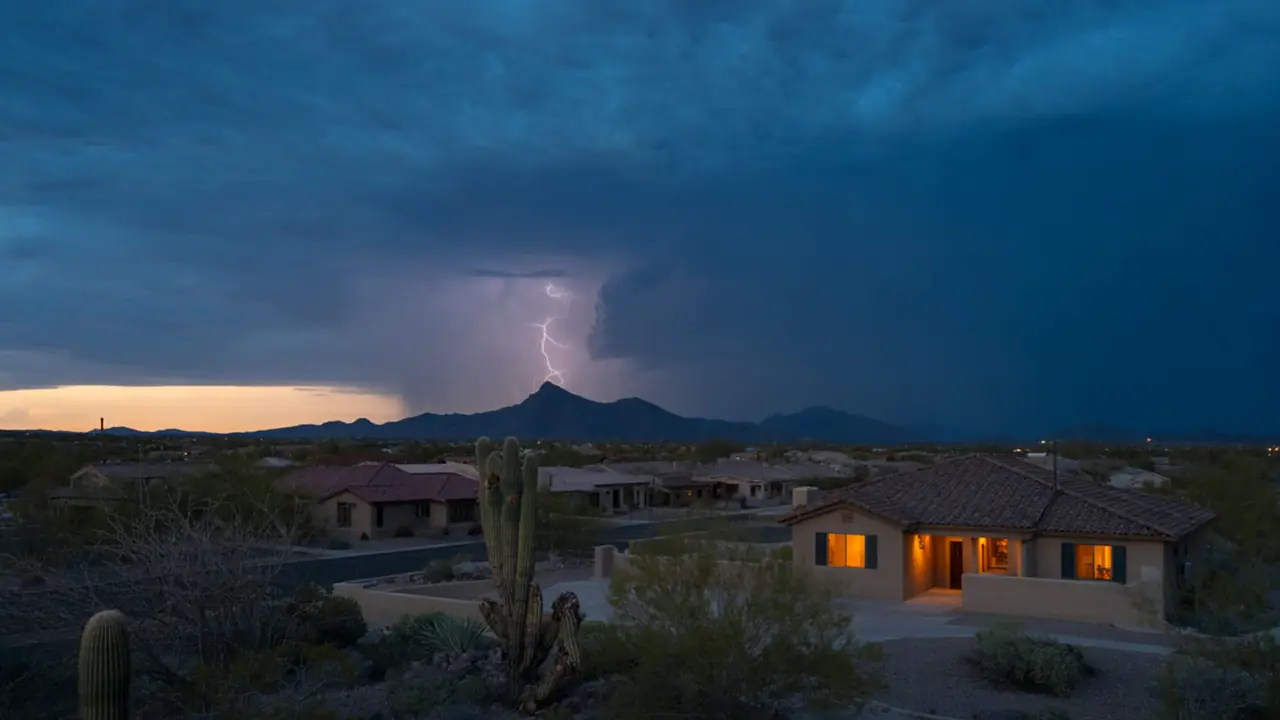
Three local reasons. First, an outage that lasts hours rather than days, the kind a storm or an equipment fault usually causes, is exactly the range a battery on critical circuits handles well. Second, a battery is useful every day: paired with solar it stores midday production for the evening, when APS and SRP on-peak prices apply; see SRP and APS on-peak hours. Third, it is silent and fuel-free, which matters in neighborhoods with HOA rules and close neighbors.
When does a generator still make sense?
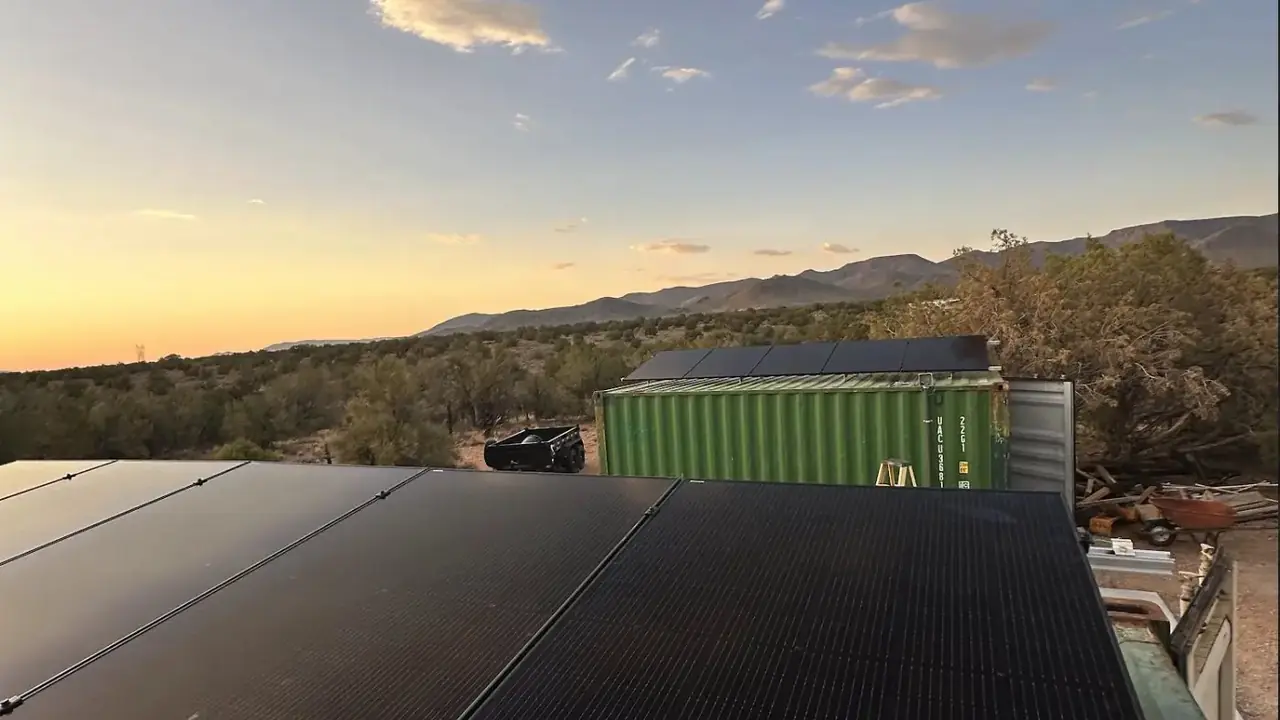
A generator is the better tool when outages can run for days, such as rural property at the end of a long line, when the whole house including central air has to run through any outage, or when the site has no solar resource. For off-grid homes, a generator is often the third source behind solar and the battery bank: it recharges the bank during a long cloudy stretch so the system recovers instead of running flat. Our off-grid solar systems can include a generator plug-in for exactly that.
How big does a battery need to be to replace a generator?
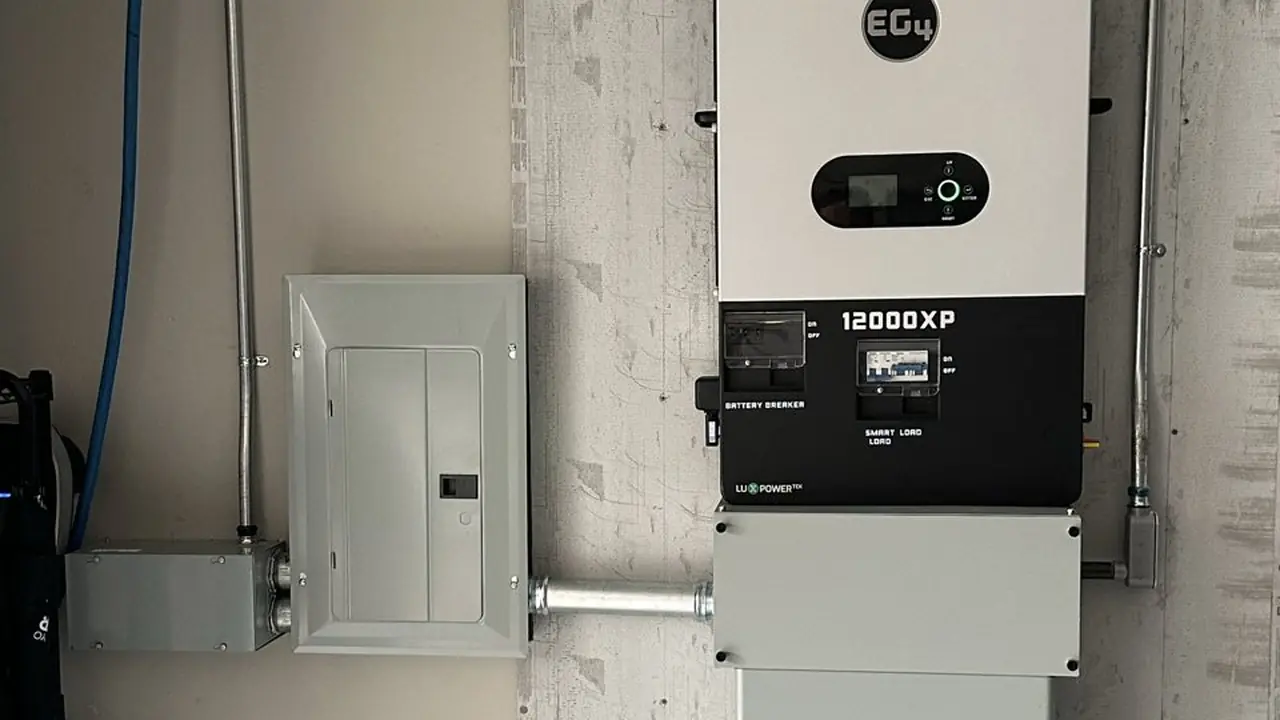
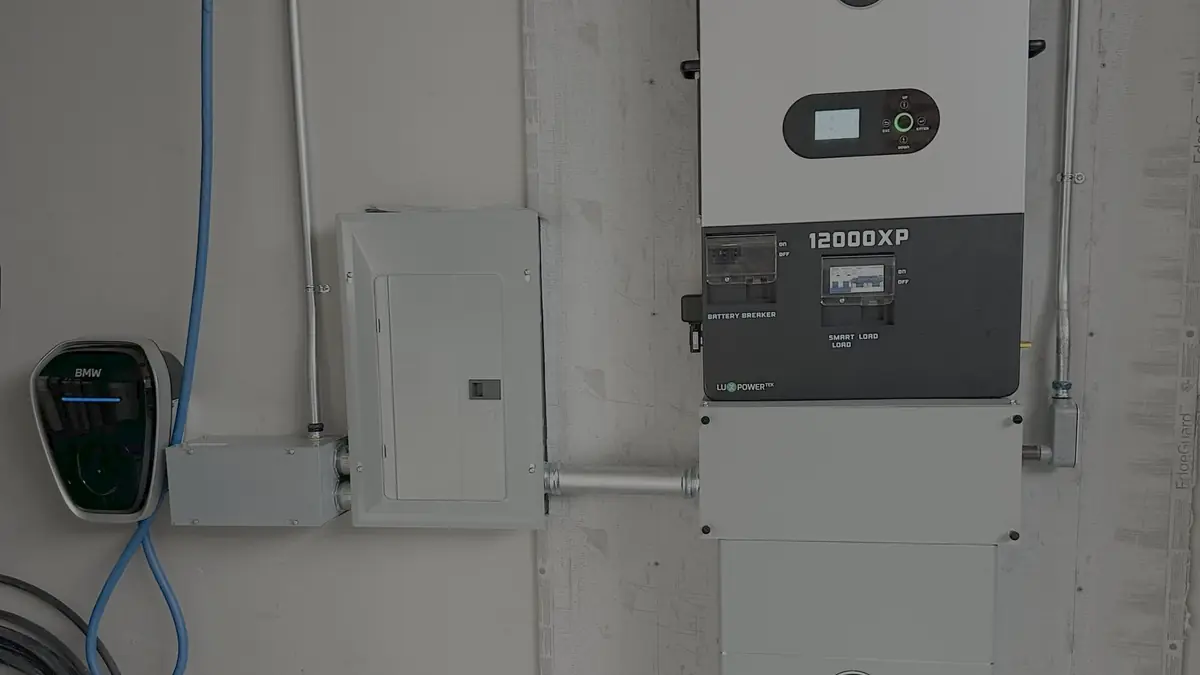
It depends on what you ask it to carry. A battery that runs the refrigerator, lights, Wi-Fi, a well pump and medical equipment is far smaller than one that runs central air. Two numbers decide it: battery capacity, which sets how long the loads run, and inverter output, which sets how much runs at once, including the starting surge of pumps and compressors. Our guide to how big a battery backup system you need walks through both, and the runtime calculator on the home battery backup page gives you a first estimate.
Batteries also have their own installation rules. Energy storage systems are covered by NFPA 855, which addresses where and how they are installed, and Arizona heat makes placement matter as much as size.
How a solar battery backup keeps your Arizona home running in an outage
Solar panels and the grid charge the battery through a hybrid inverter. When the grid goes down, the inverter separates the home from the grid and runs the critical loads from the battery and the sun.

Solar array
Charges the battery by day.
Home battery
Stores energy (kWh) for the evening and for outages. Wall-mounted on a shaded exterior wall beside the garage.
Hybrid inverter
Output and surge (kW). When the grid goes down, it separates the home from the grid.
Critical-loads panel
Backup circuits the system is designed to keep on:
- Refrigerator
- Lights and Wi-Fi
- Medical devices
- Well pump
- A cool room
Utility meter
The grid connection, through the meter and main service panel on the same wall.
Can you combine a generator and a battery?
Yes, and it is a strong setup for rural Arizona. The battery handles every short outage silently; the generator only starts during a long one, to recharge the bank. That keeps generator run time, fuel and noise to a minimum. Adding either one to an older home can also mean a panel upgrade or subpanel first, which a load calculation will show.
What should you ask before choosing a generator or a battery?
The right answer comes from your own outage history and loads, not from the equipment. Before you decide, answer these:
- How long do your outages last? Short storm outages favor a battery; multi-day rural outages may need a generator or solar recharging.
- What has to stay on? A refrigerator, Wi-Fi and lights are a small list; central air is a large one.
- Is anyone on medical equipment? Then the backup has to start without someone going outside to run it.
- Where would it sit? A generator needs outdoor space away from windows and doors; a battery is placed where heat and ventilation suit it.
- Do you have solar or plan to? A battery paired with solar recharges every sunny day, which a generator cannot do.
- Does your panel have room? Either option may need a critical loads panel, an inlet or a panel upgrade, so a load calculation comes first.
Compare both options for your home
Tell us how long your outages run and what has to stay on, and a licensed electrician will lay out the battery, generator or combined option that fits. Start with Build & Price, call (602) 704-4648, or send us a message.
Frequently asked questions
Is a whole home generator worth it in Arizona?
It can be for long rural outages or homes that must run central air through any outage. For most Valley homes with short to moderate outages, a battery system on the critical circuits is quieter, needs no fuel and also works every day with solar.
Do I need a transfer switch for a generator?
Yes, for anything that connects to your home's wiring. A transfer switch or interlock keeps the generator from feeding power back onto the utility line, which can injure line workers. Plugging a generator into a wall outlet is never safe.
Can a battery and a generator work together?
Yes. Many off-grid and rural systems use the battery as the everyday source and a generator as a third source that recharges the bank during a long cloudy stretch.
Sources
- CDC: What to do to protect yourself during a power outage
- NFPA 70, National Electrical Code
- NFPA 855, Standard for the Installation of Stationary Energy Storage Systems
- Ready.gov: Power outages
About the author
Nirvana Energy is an Arizona solar, battery and electrical contractor based in Gilbert, licensed and bonded under ROC 357597, CR-11 Electrical, with an electrical background in the data center industry. Our own crews install battery backup and off-grid systems statewide. Learn more about Nirvana Energy.