Off-grid living in Arizona works when power and water are planned together before you build. Power usually means a solar array, a battery bank and an inverter sized for winter sun and monsoon clouds, often with a generator as backup. Water means a permitted well, a solar well pump or hauled water with storage. County rules set the rest.
Key takeaways
- Start with the county. Zoning, building permits, septic and water rules vary across Arizona's counties.
- Size for the worst week, not the average day. Short winter days and a run of monsoon cloud decide the array and the battery bank.
- Water is a power load. A well pump is often the largest single load on an off-grid site, and its starting surge sizes the inverter.
- Plan cooling early. A solar mini split cools a structure for far less power than a conventional unit.
Table of contents
- Can you legally live off-grid in Arizona?
- How do you size off-grid solar for Arizona?
- Where does the water come from?
- How do you stay cool off the grid?
- What does an off-grid system need over time?
- Off grid or a utility line extension?
- What does an off-grid power system include?
- What mistakes do new off-grid owners make?
- What should you check before you buy land?
- Plan power for your Arizona land
- Frequently asked questions
Can you legally live off-grid in Arizona?
In general, yes. Arizona has a long history of rural homes far from utility lines. A study for the U.S. Department of Energy at Sandia National Laboratories reports that about 15,000 homes on the Navajo Nation have no electricity, largely because of the cost of connecting rural homes miles from distribution lines (DOE and Sandia study).
The details are local. Your county decides zoning, building permits and what kind of dwelling is allowed, and septic and well rules sit with state agencies. Call the county planning office before you buy land. For the power system itself, Nirvana Energy pulls the permits for the work we install in most counties, so the system is inspected and on record.
Grid-tied, hybrid or off-grid: what each system does
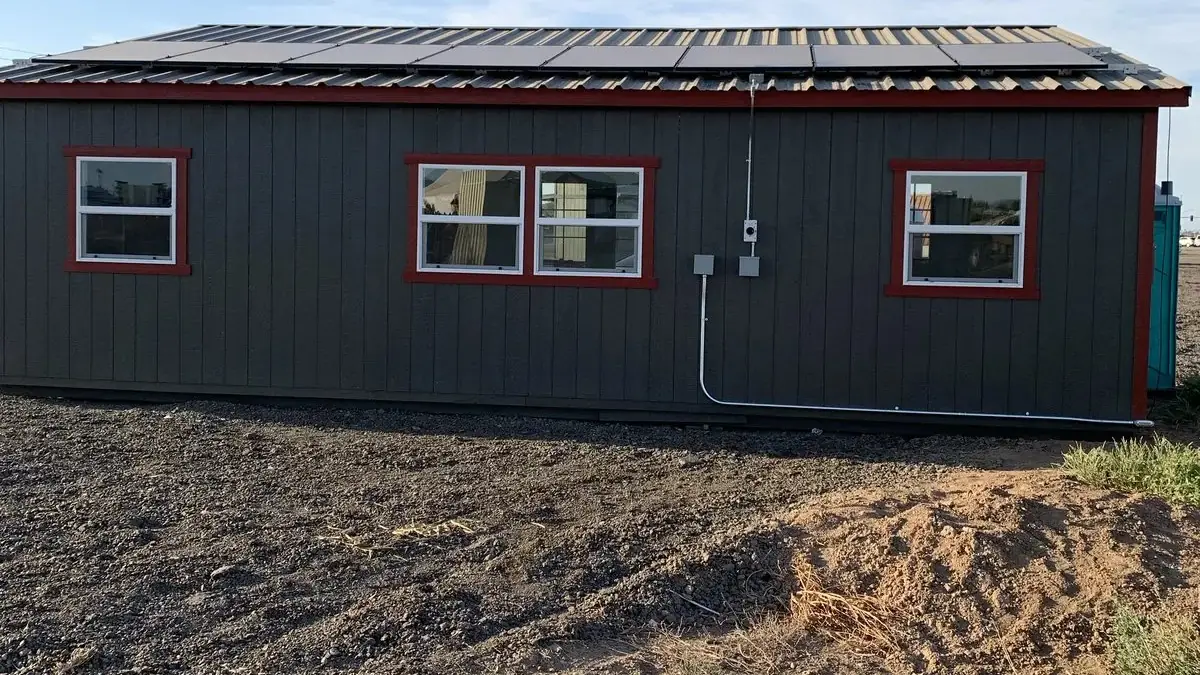
Only a system with a battery and the equipment to separate from the grid keeps power on in an outage. Off-grid systems have no utility connection at all, so they are sized for the cloudiest, shortest days.


- 01
Grid-tied solar
- Connected to the utility
- No battery
- Shuts down in an outage, by design
Best fitLowering bills where you only need daytime solar
- 02 · Recommended for Valley homes
Hybrid solar and battery
- Connected to the utility
- Battery for backup and evening peaks
- Keeps critical circuits on in an outage
Best fitValley homes on APS or SRP that want outage backup
- 03
Off-grid solar
- No utility connection
- Battery sized for the hardest stretch of the year
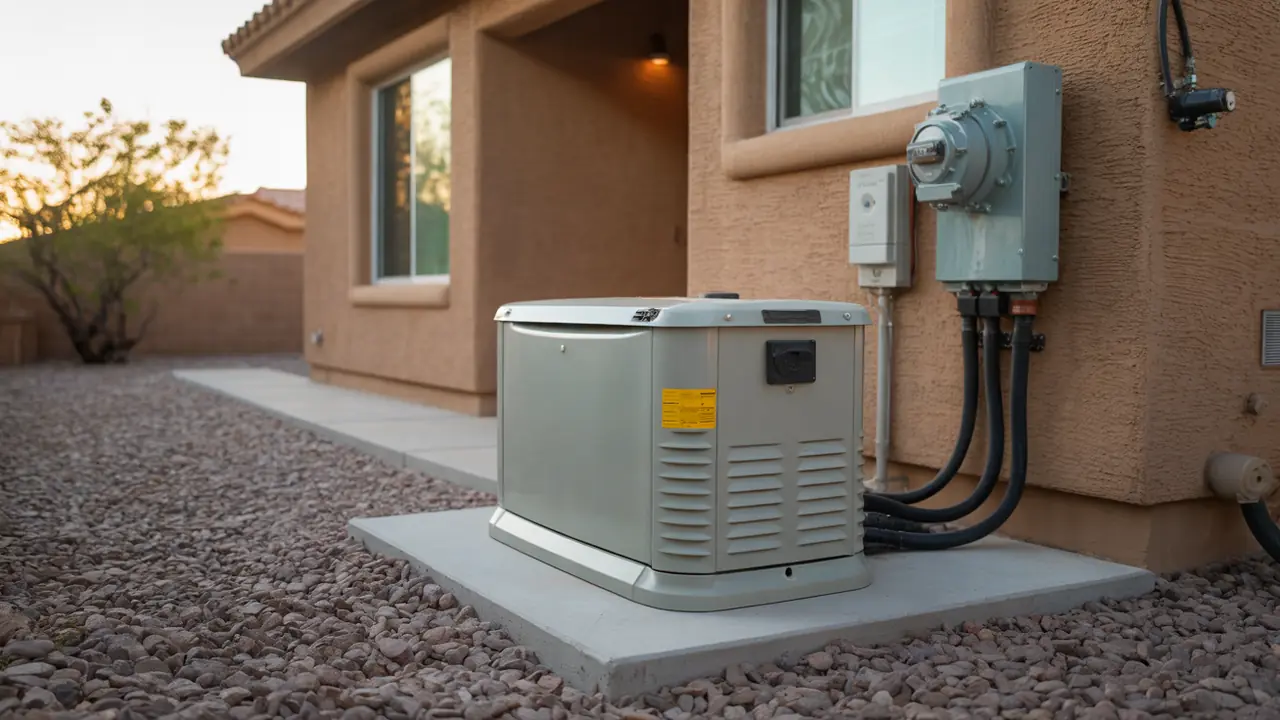
- No grid to lose; a generator plug-in as the backstop
Best fitRural land, ranches, cabins and wells
How do you size off-grid solar for Arizona?
Off grid is not a smaller grid-tied system. There is no backstop, so the design has to cover the hardest stretch of the year:
- A load list. Everything you run, how many watts it draws and how many hours a day: the refrigerator, lights, a well pump, a mini split, tools, internet.
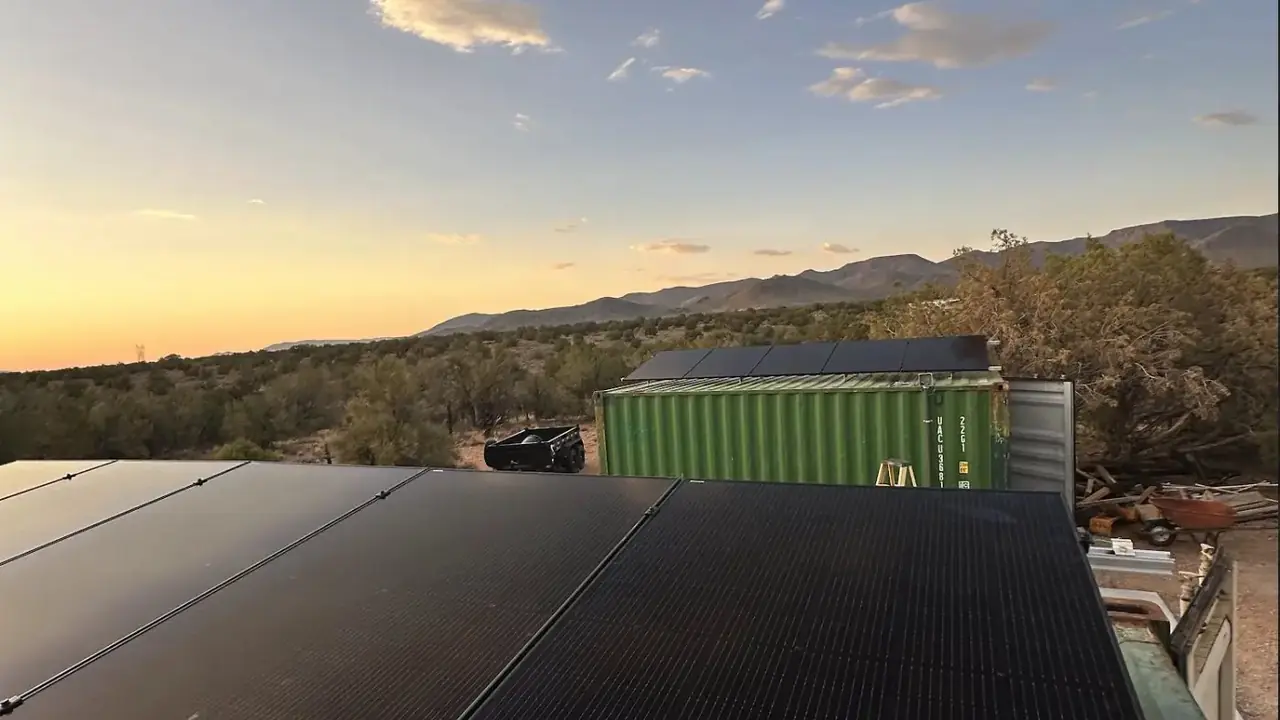
- The array for winter. December days are short and the sun is low, so the array is sized for winter production, not June.
- The battery bank for cloudy stretches. Monsoon season can bring several overcast days in a row; the bank carries you through so the system recovers instead of running flat.
- The inverter for surges. Pumps and compressors draw several times their running power for a moment at startup.
- A third source. A generator plug-in recharges the bank in a long cloudy run.
The DOE and Sandia study makes the same point from the other direction: each household and location changes the system requirements. Our off-grid solar systems are designed from that load list and a site visit.
Where does the water come from?
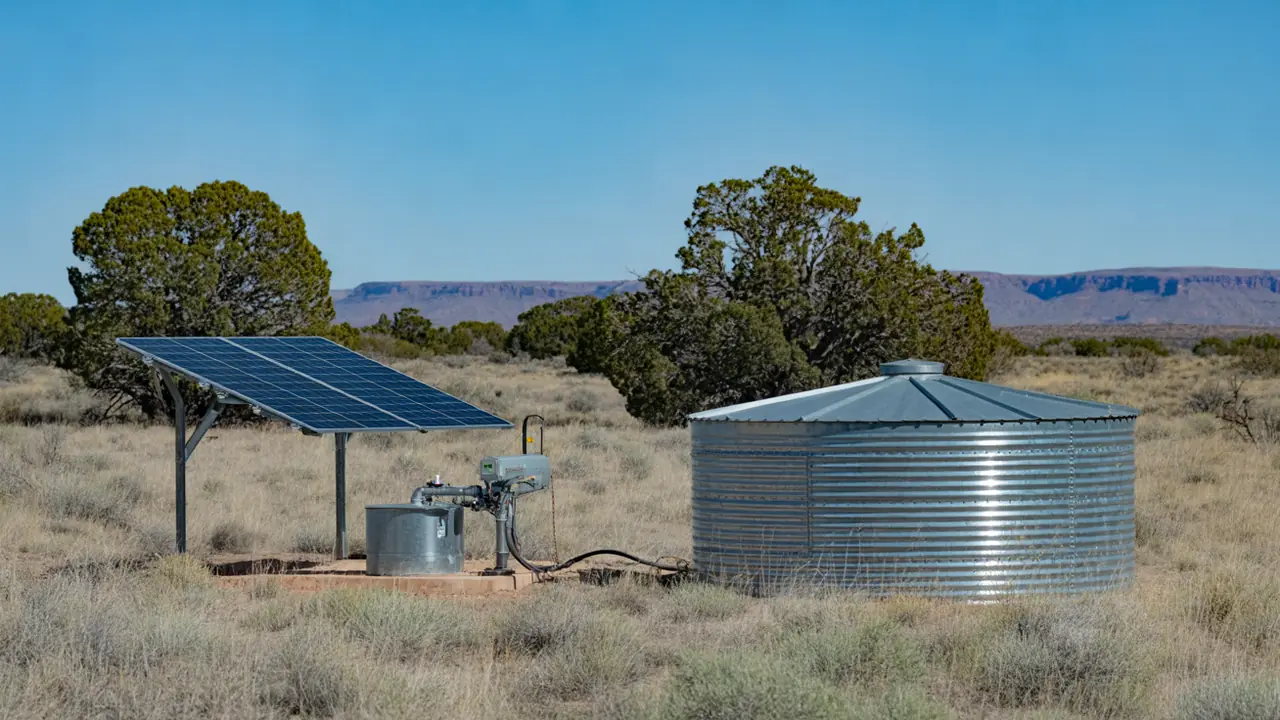
Most off-grid Arizona homes use a private well, hauled water stored in a cistern, or both. If you drill, the Arizona Department of Water Resources requires a Notice of Intent to drill before a new well is drilled, deepened or modified, and a licensed well-drilling contractor must do the work. A domestic exempt well is equipped to pump 35 gallons per minute or less.
Pumping that water takes power. A submersible pump can run on its own direct-coupled solar array filling a storage tank, or on the home's battery system with an inverter sized for its surge. We compare both in our guide to solar well pumps for Arizona land.
How do you stay cool off the grid?
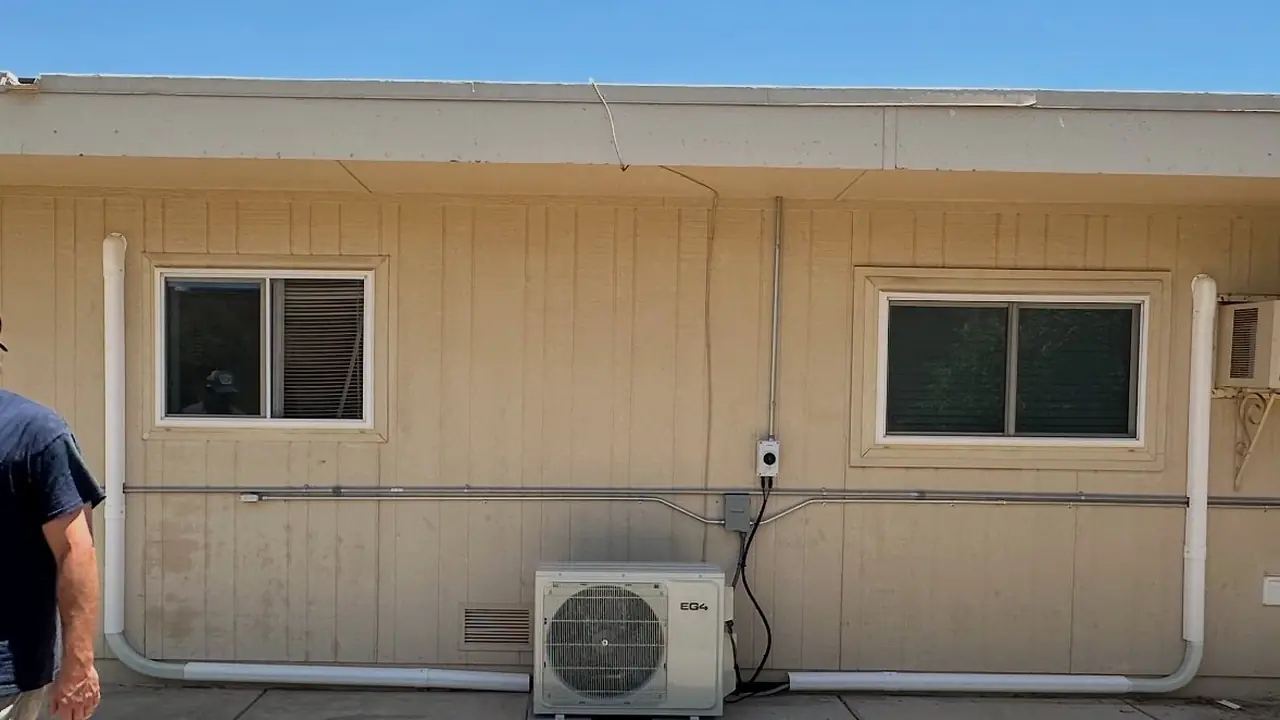
Cooling is the load that breaks most off-grid budgets. A conventional air conditioner is often the largest load on the whole site. A DC solar mini split runs first on its own panels and draws far less, which is why many of our off-grid owners pair the system with one; see do solar air conditioners work in Arizona heat and our solar mini split installs.
Shade, insulation and orientation matter just as much. A container or tiny home with a shaded west wall needs a far smaller unit than one baking in the afternoon sun.
What does an off-grid system need over time?
Three things wear on off-grid systems in Arizona: heat, dust and growth. Batteries last longer in a shaded, ventilated spot than on a sun-facing wall. Dust after a dry spring or a haboob cuts production until the panels are cleaned, and a bigger household or new loads can outgrow the original design. A yearly check catches all three; our solar maintenance and retrofit work covers systems we did not install, too.
Off grid or a utility line extension?
On remote land a line extension can run a long way before it reaches you, and a properly sized off-grid system takes that quote out of the equation. It is worth getting both answers before you decide. A battery and generator pairing is also common on sites that do have grid power but sit at the end of a long rural line; see home generator vs battery backup.
What does an off-grid power system include?
Every off-grid home runs on the same building blocks. The sizes change from cabin to full residence; the parts do not.
| Part | What it does |
|---|---|
| Solar array | Makes the energy, usually on a ground mount aimed for winter sun |
| Charge control | Manages charging so the battery bank is filled safely |
| Battery bank | Stores the day's energy for nights and cloudy days |
| Inverter | Turns stored DC power into the AC power household loads use, and covers starting surge |
| Generator input | An optional third source for long cloudy stretches |
| Monitoring | Shows what the system makes, stores and uses, so you can adjust before the bank runs low |
What mistakes do new off-grid owners make?
Most problems come from sizing for an average day instead of the hard one.
- Sizing for summer sun. The array has to cover short winter days and low sun angles, and high-country sites add snow and shade.
- Forgetting surge. A well pump or a compressor draws several times its running power at startup, and the inverter has to cover the largest one.
- Too few days of autonomy. Monsoon cloud cover can thin the sun for days, so the battery bank needs reserve beyond one night.
- A hot battery room. Summer heat shortens battery life unless the bank is placed and ventilated well.
- Long, undersized wire runs. The array, the house and the well are often far apart on open land, and wire has to be sized for the distance.
- No room to grow. A workshop, a mini split or an EV added later is easier when the inverter and bank were sized with it in mind.
What should you check before you buy land?
Power is easier to plan before the deed is signed. Before you buy, find out:
- How far the nearest utility line is, and ask the utility what an extension would involve, so you can compare it with an off-grid system.
- Whether there is a well or water rights, and what ADWR requires for a new one.
- Where an array would sit, with open sky to the south and room for a ground mount.
- What the county requires for permits on a home, a container build or a tiny home.
- Whether equipment can be delivered, since battery banks and racking arrive on trucks.
Plan power for your Arizona land
Send us your load list and where the land is, and a licensed electrician will size the array, battery bank and inverter. Start with Build & Price, call (602) 704-4648, or send us a message. You can also see finished off-grid builds on our work page.
Frequently asked questions
Can you legally live off-grid in Arizona?
Generally yes, but county rules decide the details: zoning, building permits, septic approval and how you get water. Check with your county planning office before you buy land, and make sure the electrical work is permitted and inspected.
How do you work out the size of an off-grid system for your land?
Big enough to cover your daily use plus the cloudy stretches. Start with a list of everything you run each day, then size the array for short winter days, the battery bank for runs of monsoon cloud, and the inverter for the starting surge of pumps and compressors.
Do I need a permit to drill a well in Arizona?
You must file a Notice of Intent to drill with the Arizona Department of Water Resources before a new well is drilled, deepened or modified, and a licensed well driller must do the work. A domestic exempt well is equipped to pump 35 gallons per minute or less.
Sources
- U.S. Department of Energy and Sandia National Laboratories: Sizing small-scale renewable energy systems for the Navajo Nation and rural communities
- Arizona Department of Water Resources: Well drilling in Arizona
- U.S. Department of Energy: Consumer guide to residential renewable energy
About the author
Nirvana Energy is an Arizona solar, battery and electrical contractor based in Gilbert, licensed and bonded under ROC 357597, CR-11 Electrical. Our own crews build off-grid systems for land, cabins, tiny homes and container builds anywhere in Arizona. Learn more about Nirvana Energy.