Yes, solar air conditioners work in Arizona, and the heat is part of why: cooling demand peaks on the same sunny afternoons the panels produce the most. The type matters. A DC solar mini split runs first on its own panels, central air can run on a rooftop solar system, and small portable solar units cool little more than a tent or a van.
Key takeaways
- "Solar air conditioner" means three different things: a DC solar mini split, a regular AC on a solar system, or a portable unit with a panel.
- A DC solar mini split is the most direct. Its outdoor unit takes direct current from its own panels and draws from the home when the sun is not enough.
- Size the room first. A proper cooling load calculation, not a guess, decides the unit.
- Night cooling needs storage or the grid. Pair a unit with a battery to keep one room cool through an outage.
Table of contents
- What is a solar air conditioner?
- How does a DC solar mini split work?
- Do solar air conditioners keep up in 115 degree heat?
- Which rooms are the best fit?
- Can a solar air conditioner run during an outage?
- Solar mini split or a bigger solar system?
- How do you size a mini split for an Arizona room?
- What does installing a solar mini split involve?
- How do you keep a solar mini split running well?
- Find the right unit for your room
- Frequently asked questions
What is a solar air conditioner?
The phrase covers three setups:
- DC solar mini split. A ductless heat pump whose outdoor unit can run directly on direct current from a few dedicated panels. In daylight the panels feed the compressor first; when they cannot keep up, it draws from the home's supply.
- Conventional AC on a solar system. Central air or a standard mini split runs on the house's power, and a rooftop solar system offsets that use over the day and the year.
- Portable solar units. Small units with their own panel and often a battery. They suit a van, a tent or a very small room, not an Arizona bedroom in July.
For homes, the first two are the real options, and they solve different problems.
How does a DC solar mini split work?
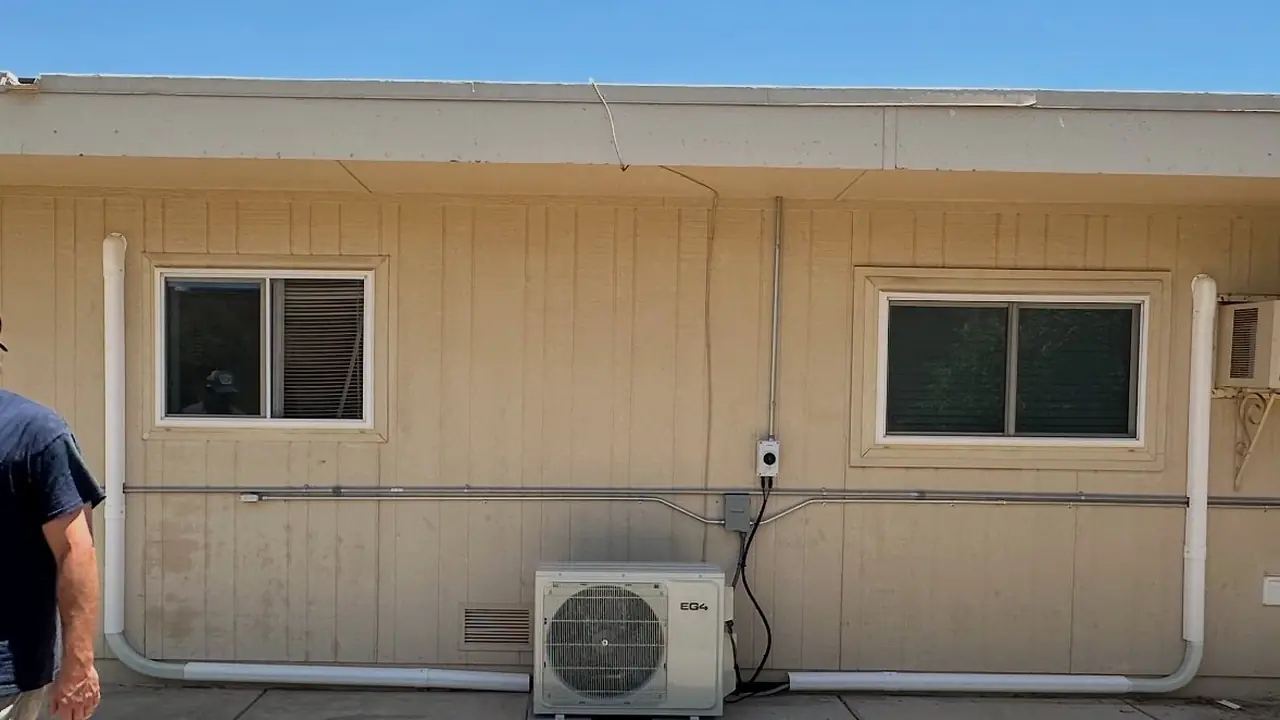
A mini split is a heat pump: an outdoor unit with the compressor and an indoor head on the wall, connected by a refrigerant line set, with no ductwork. ENERGY STAR describes how the outdoor unit moves heat rather than making it, and runs in reverse for cooling in warm months.
A DC solar model adds a direct solar input to the outdoor unit. On a sunny afternoon the room is cooled largely by the sun, which lines up the biggest load in an Arizona home with the hours the panels make the most. Our solar powered mini splits are installed panel to line set by one crew, so the electrical and the HVAC side are not split between two contractors.
Do solar air conditioners keep up in 115 degree heat?
They can, when the unit is sized for the room. Undersizing is the common failure: a unit that is too small runs flat out all afternoon and never catches up. The Building America Solution Center's ductless heat pump guide calls for an ACCA Manual J cooling load calculation for each space before selecting equipment, and a check of the home's electrical system for the new load. West-facing glass, ceiling insulation and how many people use the room all change the answer.
Efficiency has also come a long way. The same guide notes that some ductless heat pumps now exceed 35 SEER2 in cooling efficiency.
Which rooms are the best fit?
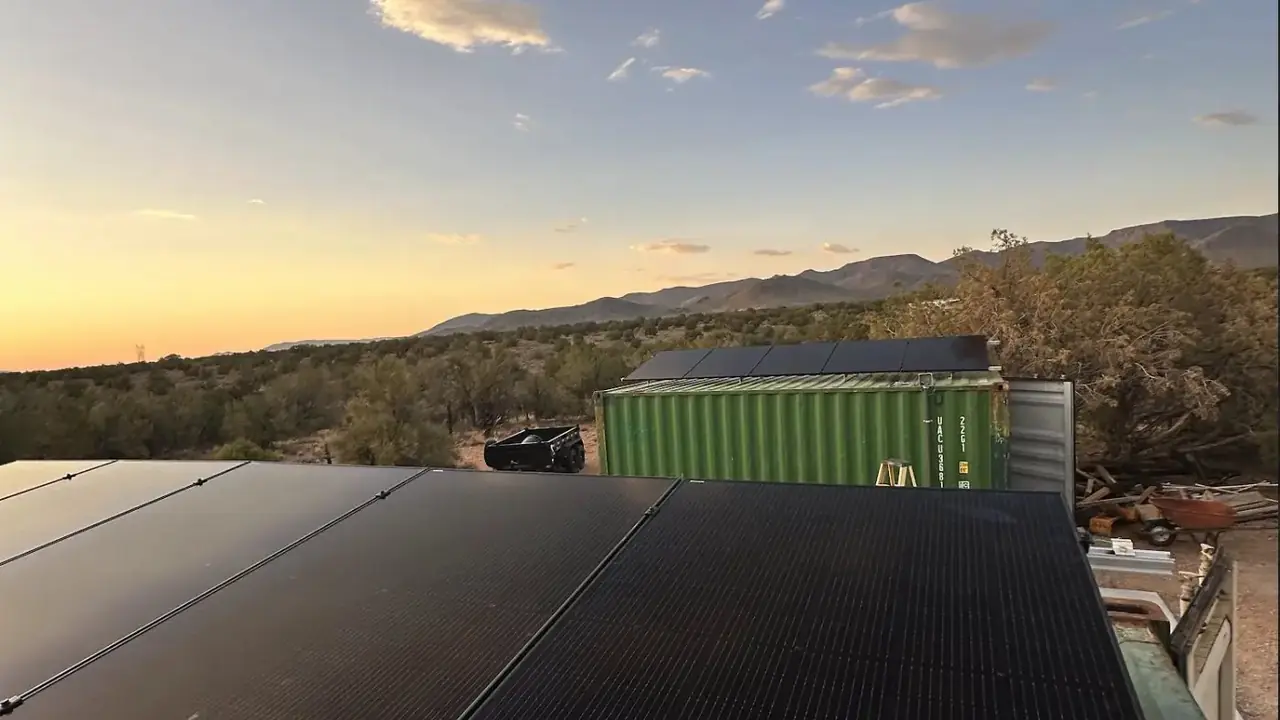
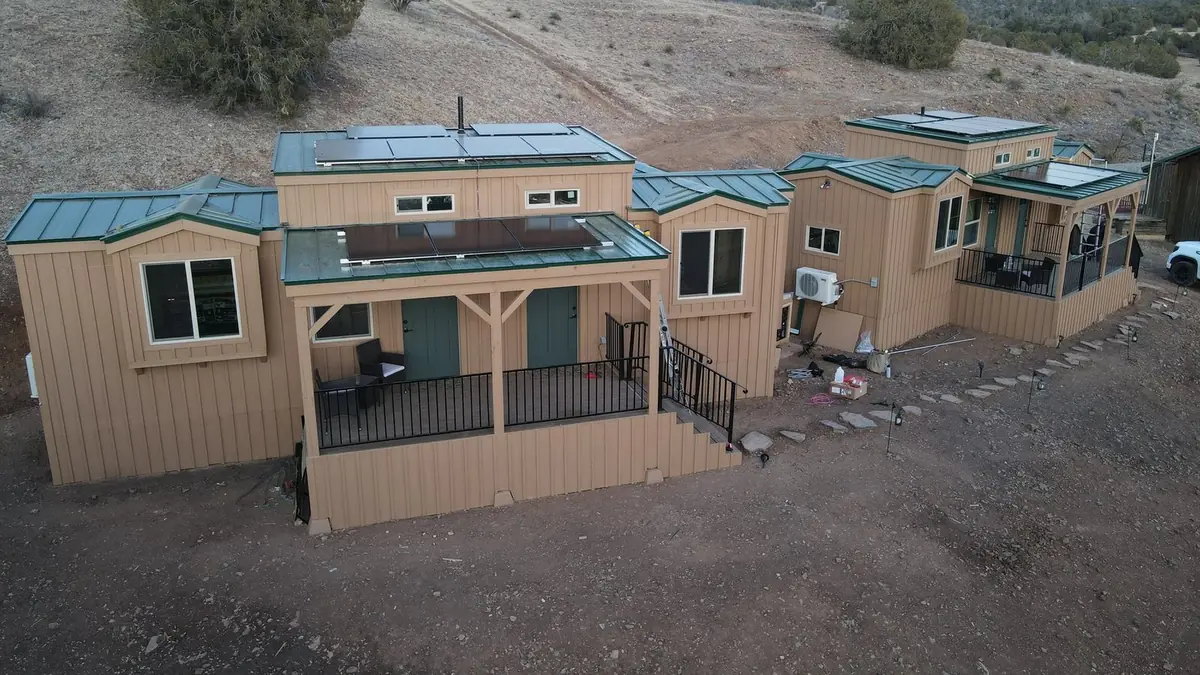
The rooms central air struggles to reach: garages and workshops, casitas and guest houses, a home office over the garage, a bedroom on the hot west side, and cabins or tiny homes. On off-grid land, a solar mini split is often the only practical way to cool a structure, because it draws far less than a conventional unit. Our guide to off-grid living in Arizona covers how cooling fits into an off-grid load list.
Can a solar air conditioner run during an outage?
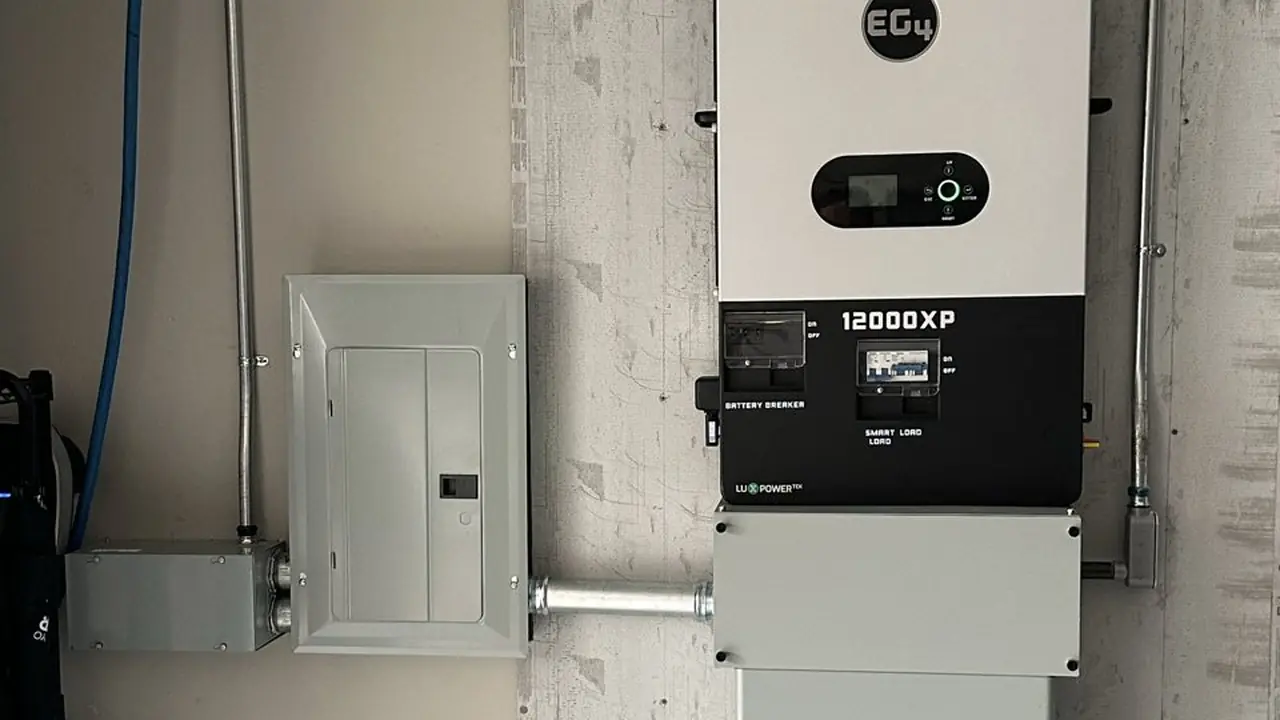
A DC solar mini split wired to its own panels can keep running in daylight during an outage, depending on how it is connected. To keep a room cool at night or through a long storm, pair it with a home battery backup system. One cool room is a common choice on an outage list, and it keeps the battery far smaller than one sized for central air; see how big a battery backup system you need and our monsoon outage guide.
Grid-tied, hybrid or off-grid: what each system does
Only a system with a battery and the equipment to separate from the grid keeps power on in an outage. Off-grid systems have no utility connection at all, so they are sized for the cloudiest, shortest days.


- 01
Grid-tied solar
- Connected to the utility
- No battery
- Shuts down in an outage, by design
Best fitLowering bills where you only need daytime solar
- 02 · Recommended for Valley homes
Hybrid solar and battery
- Connected to the utility
- Battery for backup and evening peaks
- Keeps critical circuits on in an outage
Best fitValley homes on APS or SRP that want outage backup
- 03
Off-grid solar
- No utility connection
- Battery sized for the hardest stretch of the year
- No grid to lose; a generator plug-in as the backstop
Best fitRural land, ranches, cabins and wells
Solar mini split or a bigger solar system?
If one or two rooms are the problem, a DC solar mini split targets them directly. If the whole house is expensive to cool, central air on a properly sized solar system, with a battery for the evening peak, may make more sense. The U.S. Department of Energy's heat pump overview is a good primer on the heat pump options either way.
How do you size a mini split for an Arizona room?
Square footage is only the starting point. A unit sized for a mild climate struggles in a west-facing Arizona room in July, and an oversized one cycles on and off and handles humidity poorly. The factors that matter:
- Room size and ceiling height, which set the volume of air to cool.
- Sun exposure. West and south windows and an uninsulated roof add a lot of afternoon heat.
- Insulation and air sealing. A converted garage or a container build behaves very differently from a finished bedroom.
- People and equipment. A home office with computers or a workshop with tools adds heat.
- How you will use it. Daytime-only cooling on the unit's own panels, or around the clock with grid or battery power after dark.
A room load calculation turns those into a unit capacity, and the unit capacity sets how many panels it needs.
What does installing a solar mini split involve?
A typical install follows the same order:
- Site visit. We pick the indoor head location, the outdoor unit spot and where the panels can mount with good sun.
- Mounting. The indoor head goes on the wall, the outdoor unit on a pad or bracket, and the panels on the roof or a ground mount.
- Line set and wiring. A small opening in the wall carries the refrigerant line set and the control wiring between the head and the outdoor unit.
- The electrical connection. A circuit from your panel for after-dark use, or a tie-in to a battery or off-grid system.
- Commissioning. The system is charged, tested and walked through with you, including the remote or app.
Because there is no ductwork, most single-room installs are far less disruptive than a central air replacement.
How do you keep a solar mini split running well?
Ductless systems need little, but not nothing. ENERGY STAR's ductless guidance stresses keeping filters clean, since a clogged filter cuts airflow and efficiency. Keep the outdoor unit clear of debris and plants, and keep its panels clean: Arizona dust cuts output, and our guide on how often to clean solar panels applies to them too. If cooling drops off on a sunny day, check the filter first, then the panels, then call for a service visit.
Find the right unit for your room
Tell us which room is too hot and how you use it, and a licensed electrician will recommend the unit and the panels. Start with Build & Price, call (602) 704-4648, or send us a message.
Public reviews name mini-split work in Tempe and El Mirage. Those city pages stay with what we can document there, and they do not treat generated photos as job photos. We also install solar mini splits from our Gilbert office in East Valley communities such as Mesa, Chandler and Queen Creek, described on those service-area pages without inventing local reviews.
Frequently asked questions
Can a solar air conditioner run at night?
A DC solar mini split runs on its panels in daylight and draws from the home's supply, or a battery, when the sun is down. Without a battery or grid connection it cools only while the panels produce.
How many solar panels does it take to run an air conditioner?
It depends on the unit's size, its efficiency and how many hours a day it runs. A DC mini split comes matched to a small set of its own panels; central air on rooftop solar is sized as part of the whole home's system. A load calculation for the room comes first.
Is a solar mini split a good fit for a garage or casita?
Usually, yes. Garages, workshops, casitas and hot bedrooms are rooms central air struggles to reach, and a ductless unit cools them without ductwork, running first on the sun.
Sources
- ENERGY STAR: Ductless heating and cooling
- Building America Solution Center: Ductless (mini-split) heat pumps
- U.S. Department of Energy: Heat pumps
About the author
Nirvana Energy is an Arizona solar, battery and electrical contractor based in Gilbert, licensed and bonded under ROC 357597, CR-11 Electrical. Our own crews install DC solar mini splits, battery backup and off-grid systems anywhere in Arizona. Read more about our crew.