Arizona's monsoon season runs from June 15 to September 30, and its storms bring the year's most common reasons for a dark house: downburst winds, dust storms and lightning. Preparing your home's power means three things: protect electronics from surges, plan for hours without the grid in summer heat, and keep the circuits you cannot lose on stored energy.
Key takeaways
- The season is fixed on the calendar. The National Weather Service treats June 15 to September 30 as monsoon season; Phoenix says storms usually peak from mid-July to mid-August.
- Wind is the main outage cause. Downbursts and dust storms push branches and debris into lines and can bring down poles.
- Heat makes outages dangerous. An outage on a 110 degree afternoon is a health problem, not an inconvenience.
- Prepare in spring. Battery backup, surge protection and a solar system check are easier to schedule before June than in the middle of storm season.
Table of contents
- When is monsoon season in Arizona?
- Why do monsoon storms knock out power?
- How do you protect your home's electronics?
- What should stay on during a summer outage?
- Does rooftop solar keep the lights on in a storm?
- How do generators fit into monsoon prep?
- What should you do after a monsoon outage?
- Get your home ready before June 15
- Frequently asked questions
When is monsoon season in Arizona?
The Phoenix office of the National Weather Service says monsoon season officially extends from June 15 through September 30, the period when its hazards are most likely: damaging winds, torrential rain, frequent lightning and dust storms. The City of Phoenix adds that storms usually peak between mid-July and mid-August.
That timing matters for planning. If you want a battery backup system in place for the season, the design, the permit and the utility paperwork all take time, so spring is the right moment to start.
Arizona monsoon season and a power prep checklist
Monsoon season officially runs June 15 through September 30, and storms usually peak between mid-July and mid-August. Six steps protect your home's power before the first storm.
- Save your utility’s outage number and map in your phone
- Put electronics and pool controls on surge protectors
- Ask about a whole-home surge protective device at the panel
- Choose the circuits that must stay on in the heat
- After an outage, restart the AC and pool pump one at a time
- Run any generator outdoors only, away from windows
Why do monsoon storms knock out power?
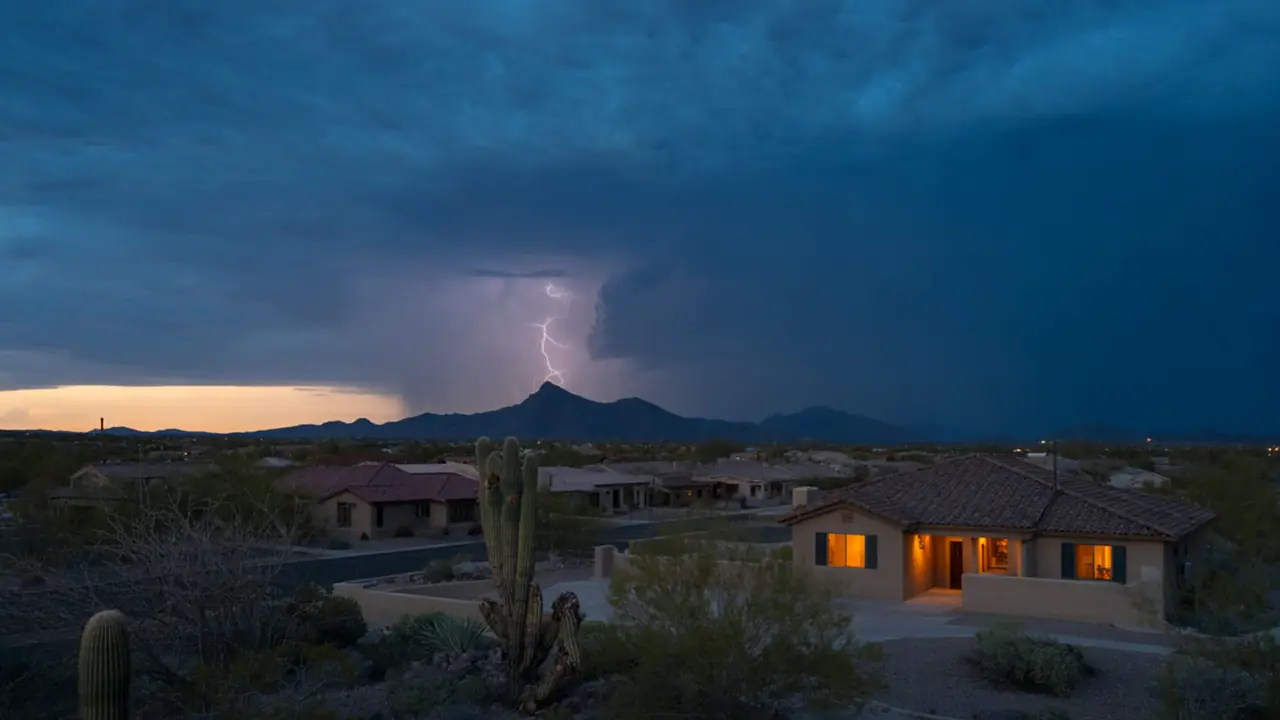
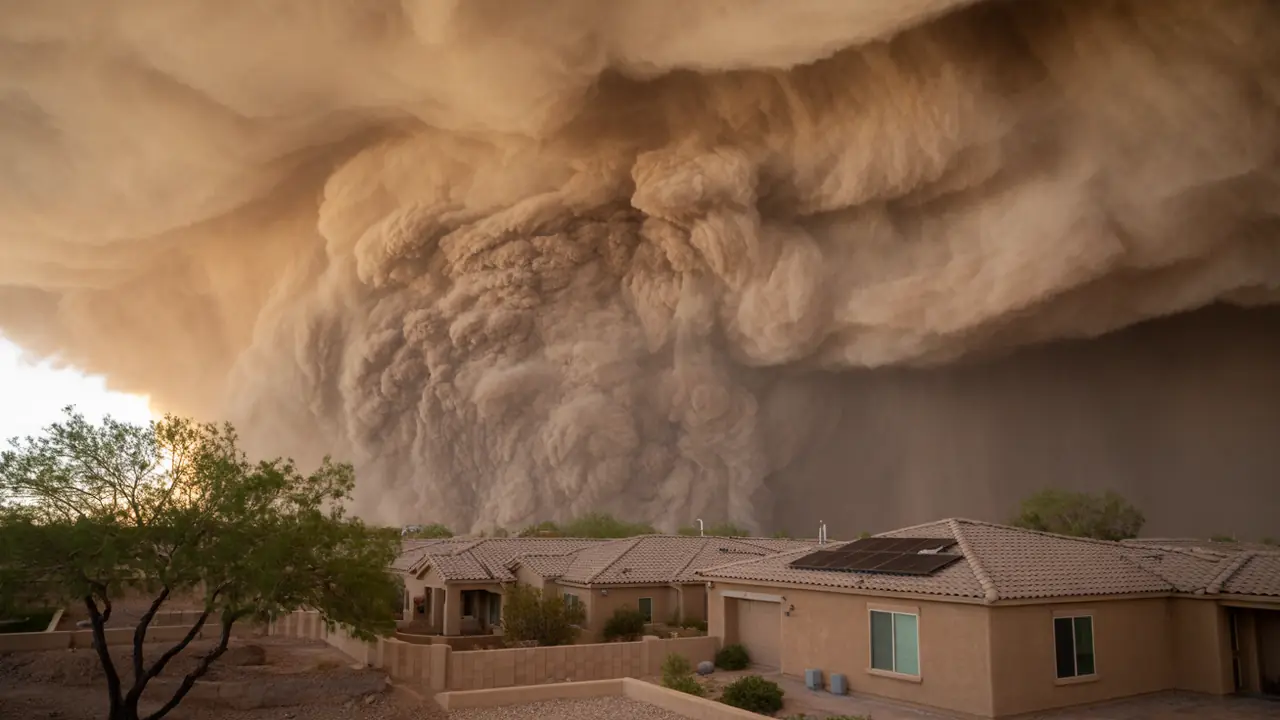
Most monsoon outages come from wind. The NWS warns that a dust storm warning can come with gusts between 40 and 60 mph, and thunderstorm downbursts can be stronger. That wind snaps branches, throws patio furniture and trampolines into lines, and can take down poles. Lightning adds strikes on lines and equipment, and flash flooding can keep repair crews from reaching damaged equipment.
What you see at home: flickering lights as lines touch and reclose, short outages of a few seconds, and sometimes a long outage while crews work through a storm's damage. For how to check and report one, see our guide to what to do in an APS or SRP power outage.
How do you protect your home's electronics?
Short outages and recloses are hard on electronics. Ready.gov advises disconnecting appliances and electronics during an outage, because power can return with momentary surges or spikes. Practical steps:
- Put computers, TVs, network gear and pool controls on quality surge protectors.
- Ask a licensed electrician about a whole-home surge protective device at the panel; it is a common add-on during residential electrical work.
- After an outage, turn large loads such as the AC and pool pump back on one at a time rather than all at once.
What should stay on during a summer outage?
In monsoon season the list is shaped by heat. Most families choose the refrigerator and freezer, a fan or one cooled room, lights, phone charging and the Wi-Fi, medical equipment such as a CPAP or oxygen concentrator, and a well or booster pump on rural property.
Cooling is the hard part. Central air is usually the largest load in the house, and a battery system sized for it is far bigger than one sized for the essentials. One efficient answer is a single cool room on a solar mini split, which draws far less than central air. Our battery backup sizing guide shows how the list turns into battery capacity and inverter output.
Does rooftop solar keep the lights on in a storm?
Not by itself. A standard grid-tied solar system shuts down when the grid goes down, so line crews are not working on a line your panels are feeding. To keep power during an outage, the system needs a battery and equipment that can separate the home from the grid. Many older Arizona systems can be retrofitted for that; see adding a battery to existing solar.
After a dust storm, watch the monitoring app. A sudden drop in daily production usually means dust on the glass, and our guide to how often to clean solar panels in Arizona covers when cleaning is worth it and when a drop points to a fault instead.
How do generators fit into monsoon prep?
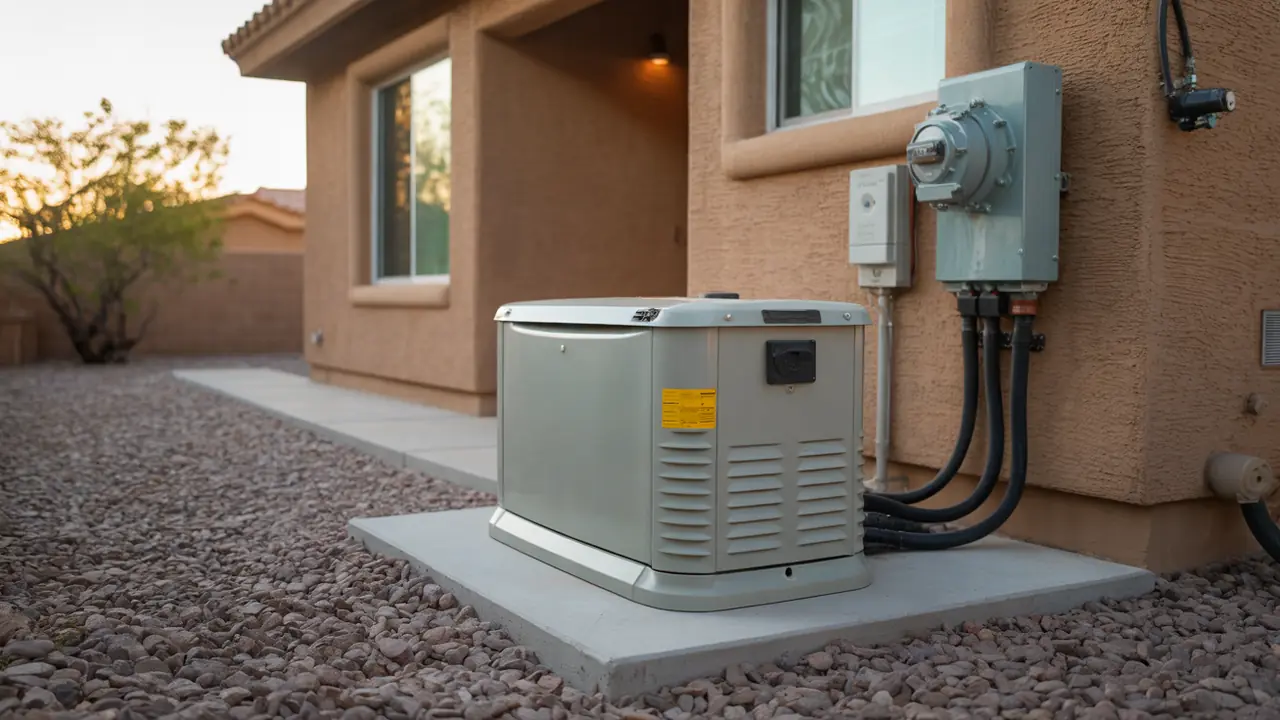
A generator can carry a home through a long outage if it is installed and used safely. Ready.gov is clear that a portable generator is used only outdoors and away from windows, and a standby generator needs proper transfer equipment so it never backfeeds the utility line. We weigh the trade-offs in home generator vs battery backup in Arizona.
What should you do after a monsoon outage?
When the power comes back, a few checks keep a storm from causing a second problem:
- Stay away from downed lines. Treat every fallen line as live and report it to your utility.
- Bring electronics back slowly. Turn sensitive equipment on one at a time rather than all at once.
- Check the food. Ready.gov advises throwing out refrigerated food that has gone above 40 degrees for two hours or more.
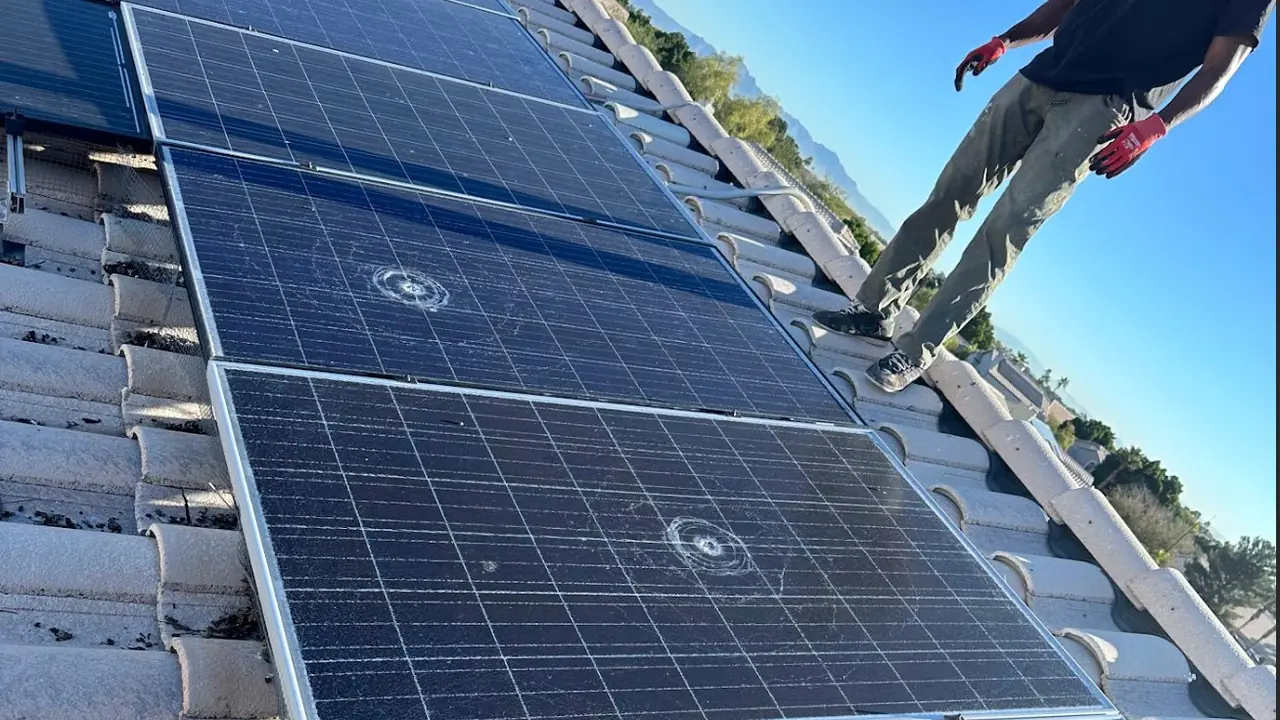
- Look at the solar array. Wind can leave debris on the panels and dust storms leave a film; check the monitoring app for a drop in production.
- Check breakers and the panel. A tripped breaker that trips again after a reset needs an electrician, not another reset.
- Review what you lost. If the outage took the refrigerator, the Wi-Fi or a cool room, that list is the start of a battery backup plan.
Get your home ready before June 15
Tell us what your household needs during a storm outage and a licensed electrician will design around it. Start with Build & Price, call (602) 704-4648, or send us a message. Consultations are free anywhere in Arizona, and we work statewide, as our service area page explains. For monsoon and utility context in a specific Valley city, see Phoenix, Gilbert, Tempe, El Mirage, or the East Valley service-area pages for Mesa, Chandler, Queen Creek, San Tan Valley, Apache Junction, Gold Canyon, Scottsdale, Fountain Hills and Sun Lakes.
Frequently asked questions
When is monsoon season in Arizona?
The National Weather Service defines Arizona's monsoon season as June 15 through September 30. The City of Phoenix notes that storms usually peak between mid-July and mid-August.
Do solar panels work during a monsoon storm?
They produce less under heavy cloud and stop feeding the house in an outage unless the system has a battery and the equipment to run without the grid. A standard grid-tied system shuts down when the grid goes down, by design.
Should I check my solar panels after a dust storm?
Look at your monitoring app first. A drop in daily production after a haboob usually means a layer of dust on the glass. Cracked glass, loose racking or damaged wiring after a storm needs a professional inspection, not a hose.
Sources
- National Weather Service Phoenix: Monsoon Awareness
- City of Phoenix: Monsoon resources
- Ready.gov: Power outages
About the author
Nirvana Energy is an Arizona solar, battery and electrical contractor based in Gilbert, licensed and bonded under ROC 357597, CR-11 Electrical. Our own on-site crews design and install battery backup, off-grid solar, solar mini splits and residential and commercial electrical work anywhere in Arizona. Read who we are and how we work.