In Arizona, clean your solar panels when your monitoring app shows production falling with no other cause, which for many homes means once or twice a year, usually in late spring and after a dust storm. Rain rinses panels between washes, so long dry stretches are when dust costs the most. If output is low and the panels look clean, the problem is likely a fault, not dirt.
Key takeaways
- Let the data decide. Compare this month's production with the same month last year before you book a cleaning.
- Dust losses in dry climates are real but usually modest over a year. NREL notes semi-arid sites can lose more than 15% at their dustiest, while annual losses typically stay at 5% or less.
- Dry spells and air quality drive soiling. NREL research found airborne particulates and the length of dry periods best predict it.
- Clean gently. Soft water and a soft brush; no pressure washers, harsh chemicals or walking on panels.
Table of contents
- How much does dust really cost an Arizona solar system?
- What makes panels get dirty faster?
- How often should you clean solar panels in Arizona?
- Can you clean solar panels yourself?
- What if production is low and the panels look clean?
- Does cleaning matter more on a time-of-use plan?
- What should a professional cleaning include?
- Book a cleaning and system check
- Frequently asked questions
How much does dust really cost an Arizona solar system?
Less than most people expect over a full year, and more than you would like at the worst moment. An NREL seminar on PV soiling losses puts losses at 1 to 2% in regions with regular rain, and moderate in semi-arid climates such as southern California, where peak losses may exceed 15% but annual losses are still typically 5% or less. The worst cases are desert regions such as the Middle East, where dust storms can cut output by up to 80% until the panels are cleaned.
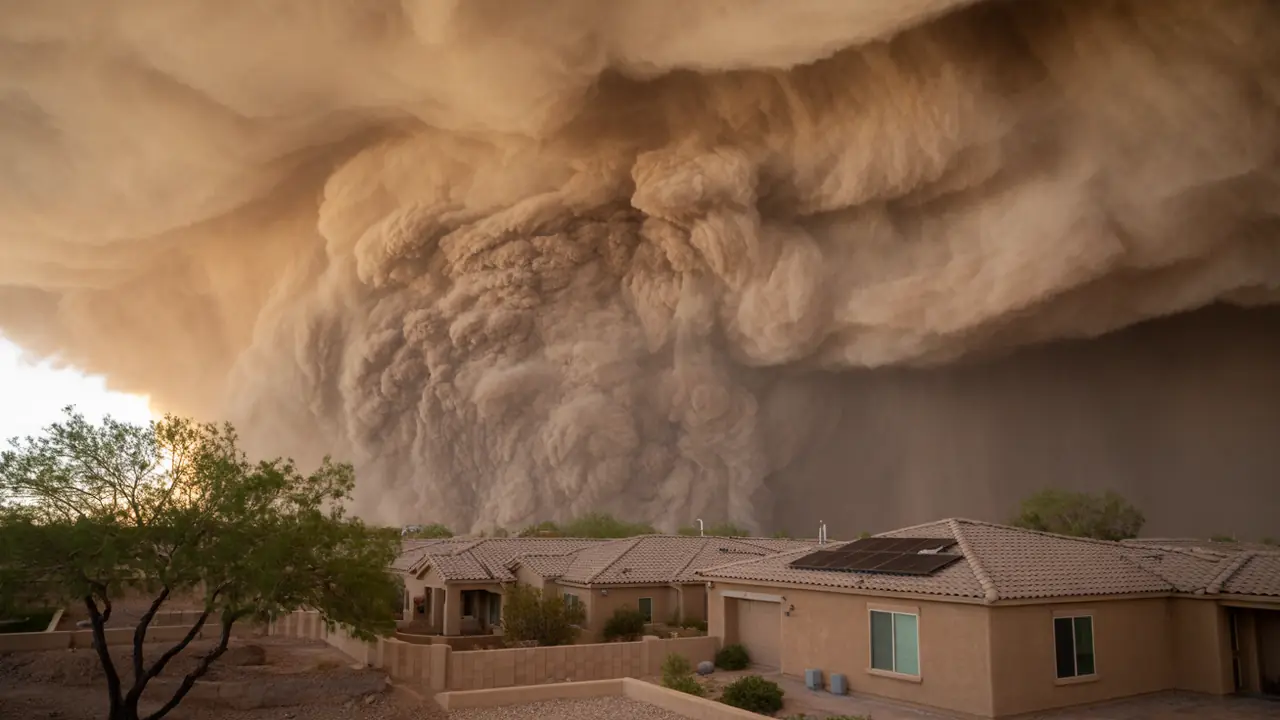
Arizona sits between those cases. Monsoon rain and winter storms rinse the glass, but a dry spring, a haboob, construction nearby or a dirt road upwind can coat panels fast.
How much output dust takes from solar panels
NREL puts soiling losses at 1 to 2% where it rains regularly; semi-arid sites can lose more than 15% at their dustiest point while annual losses typically stay at 5% or less. Desert dust storms can cut output by up to 80% until panels are cleaned.
- Regular rainfall, over a year1 to 2%
- Semi-arid climate, over a year5% or less
- Semi-arid, at the dustiest pointover 15%
- Middle East, after dust stormsup to 80%
What makes panels get dirty faster?
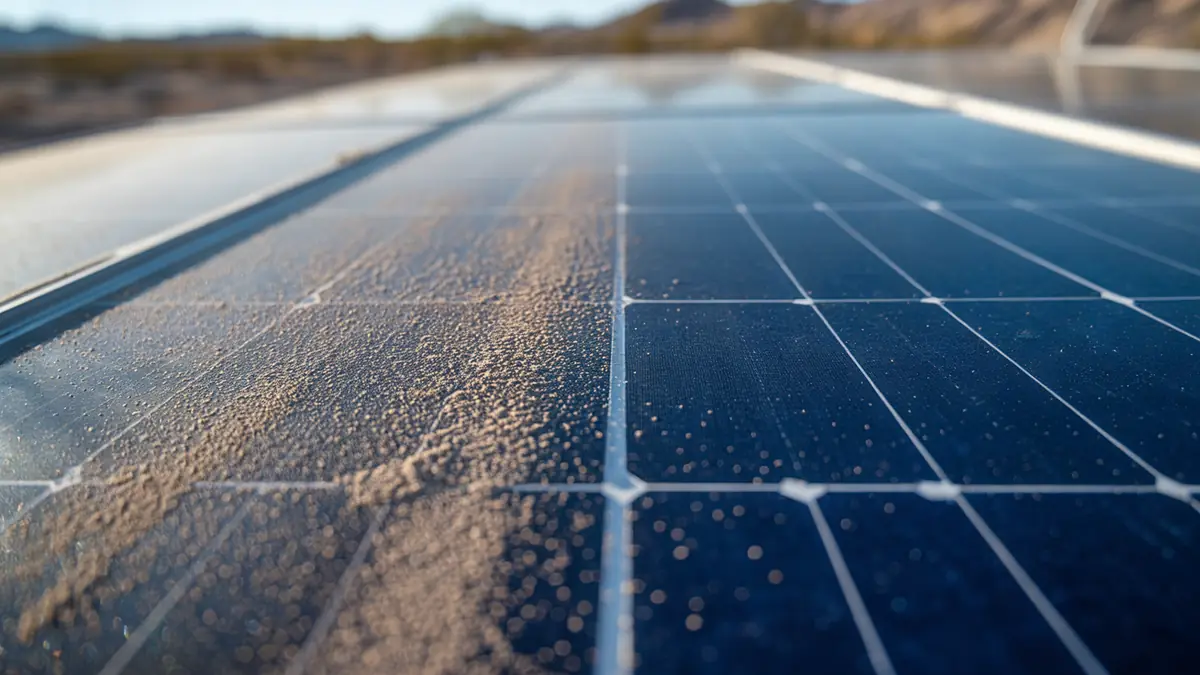
NREL researchers who compared twenty soiling stations across the United States found that the annual average of airborne particulate matter near a site was the best predictor of soiling, and that the average length of dry periods between rains mattered most among weather factors. For an Arizona homeowner that translates into a short list:
- long dry spells, especially April through June before the monsoon;
- dust storms and wind off open desert or farmland;
- nearby construction, dirt roads or unpaved lots;
- low tilt angles, which let dust settle instead of sliding off;
- birds roosting under or on the array.
How often should you clean solar panels in Arizona?
Use your production numbers, not the calendar. Pull up the monitoring app and compare recent daily production with the same weeks a year earlier, on clear days. If production has slipped steadily through a dry stretch and you can see a film on the glass from the ground, a cleaning will likely pay for itself in recovered output. If production is in line, the dust you see is costing very little.
For many Valley homes that works out to once or twice a year: late spring, before the hottest and most productive months, and after a major dust storm. Remember that heat also lowers panel output in summer, so compare like with like.
Can you clean solar panels yourself?
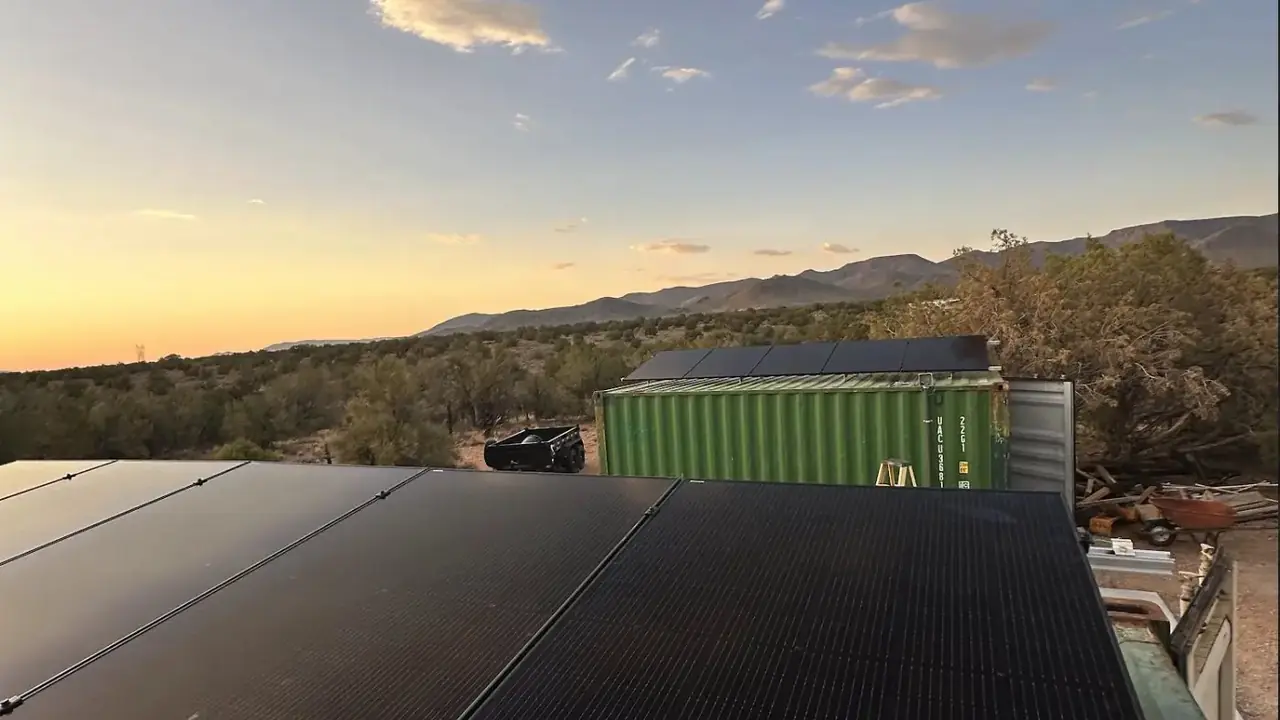
You can clean a ground-mounted array you can reach from the ground. Check the panel maker's instructions first, because some methods affect the warranty, and then:
- clean early in the morning or in the evening, when the glass is cool;
- use soft or deionized water and a soft brush or squeegee on a pole;
- skip pressure washers, abrasive pads, harsh soap and anything that scratches;
- never stand or kneel on panels.
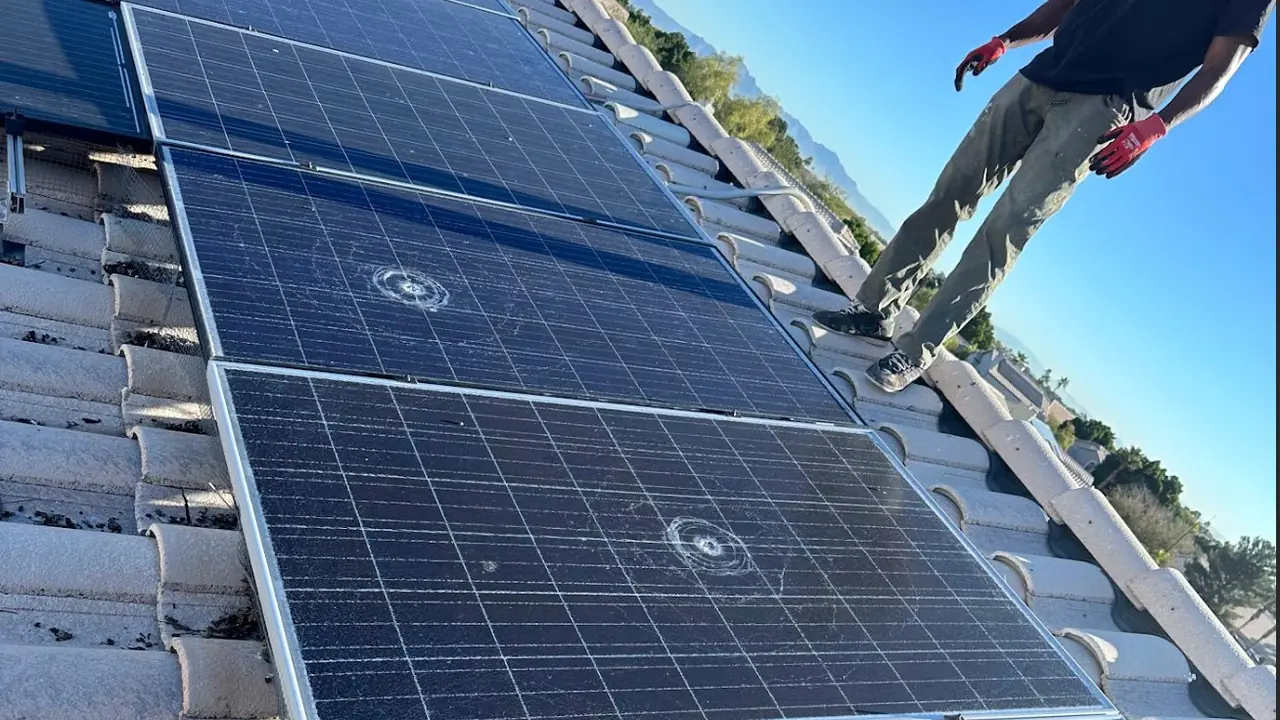
Rooftop arrays are different. The work means ladders and a hot roof around live equipment, and a slip costs far more than a season of dust. That is where a professional solar maintenance visit makes sense: panel cleaning with methods that do not void the warranty, plus a look at the rest of the system while someone is up there.
What if production is low and the panels look clean?
Then dirt is not the problem. A failed panel, a tripped breaker, a loose connector, new shade from a tree or a neighbor's addition, or an inverter fault all cut production, and none of them is fixed with a brush. A maintenance visit compares what the array should make with what it does and narrows it down. Older systems with a failing inverter are also a good moment to consider an upgrade that can take a battery; see adding battery backup to existing solar.
Does cleaning matter more on a time-of-use plan?
A little. On APS and SRP time-of-use plans, the energy your panels make in the afternoon and the energy a battery stores for the evening peak are worth the most, so a dirty array costs more in the months that matter. Our guide to SRP and APS on-peak hours explains how those windows work, and our monsoon season guide covers checks after a storm.
What should a professional cleaning include?
A cleaning is the right moment to check the whole system, not just the glass. A good visit covers:
- Production first. Compare the monitoring history with what the array should make, so the cleaning can be measured.
- The glass. Cleaned with soft brushes and water that will not leave a film, without pressure washing or harsh chemicals.
- Under the array. Racking, wiring and connectors checked for damage, including chewed wiring from rodents and birds nesting under panels.
- The inverter. Error logs read and the unit checked for heat and dust.
- A written summary of what was found, what was fixed and anything that needs a decision, such as an inverter replacement or adding a battery.
If production is still low after a cleaning, the cause is electrical; see our solar maintenance service.
Book a cleaning and system check
If production has dropped, tell us what the monitoring app shows and a licensed electrician will tell you whether it is dust or something else. Start with Build & Price, call (602) 704-4648, or send us a message. We work on systems we did not install, too.
Frequently asked questions
How do I know when my solar panels need cleaning?
Let production decide. Many Arizona owners clean once or twice a year, often in late spring before the summer peak and after a dust storm leaves a visible film. Rain cleans panels between washes, so a dry spring is when dust builds up the most.
Can I clean my solar panels myself?
Ground-mounted arrays you can reach safely, yes, with soft water, a soft brush and no harsh chemicals or pressure washers, following the panel maker's instructions. Rooftop arrays mean ladder and roof work around live equipment, which is where a professional visit is the safer choice.
Why is my solar production low if the panels look clean?
Dust is only one cause. A failed panel, a tripped breaker, a loose connection, shade from a new obstruction or an inverter fault all cut production. A system check compares what the array should produce with what it does and narrows it down.
Sources
- NREL: PV soiling losses, measurements, modeling and mitigation strategies (2022)
- Micheli and Muller, NREL: An investigation of the key parameters for predicting PV soiling losses
- U.S. Department of Energy: Homeowner's guide to going solar
About the author
Nirvana Energy is an Arizona solar, battery and electrical contractor based in Gilbert, licensed and bonded under ROC 357597, CR-11 Electrical. Our own crews maintain and retrofit existing solar systems across Arizona, including systems we did not install. Learn more about Nirvana Energy.