A solar water pump uses solar panels to run a well pump, usually a DC submersible pump wired straight to its own array. It pumps while the sun shines and fills a storage tank, and the tank, not a battery, carries you through the night. On a home that already has an off-grid battery system, a standard well pump can run from the battery instead, as long as the inverter can handle its starting surge.
Key takeaways
- Two ways to pump with the sun: a direct-coupled solar pump filling a tank, or a well pump on the home's solar and battery system.
- Store water, not energy. University of Arizona Cooperative Extension notes it is cheaper to store water than to store energy.
- Plan three days of storage for cloudy stretches, a common Extension rule of thumb.
- Arizona sun helps. The Southwest typically gets five to six peak sun hours a day.
Table of contents
- How does a solar water pump work?
- How big should the tank be?
- How is a solar well pump sized?
- Should the pump run on its own array or the home's battery?
- What well rules apply in Arizona?
- What else should you plan for?
- What maintenance does a solar well pump need?
- Power your well with the sun
- Frequently asked questions
How does a solar water pump work?
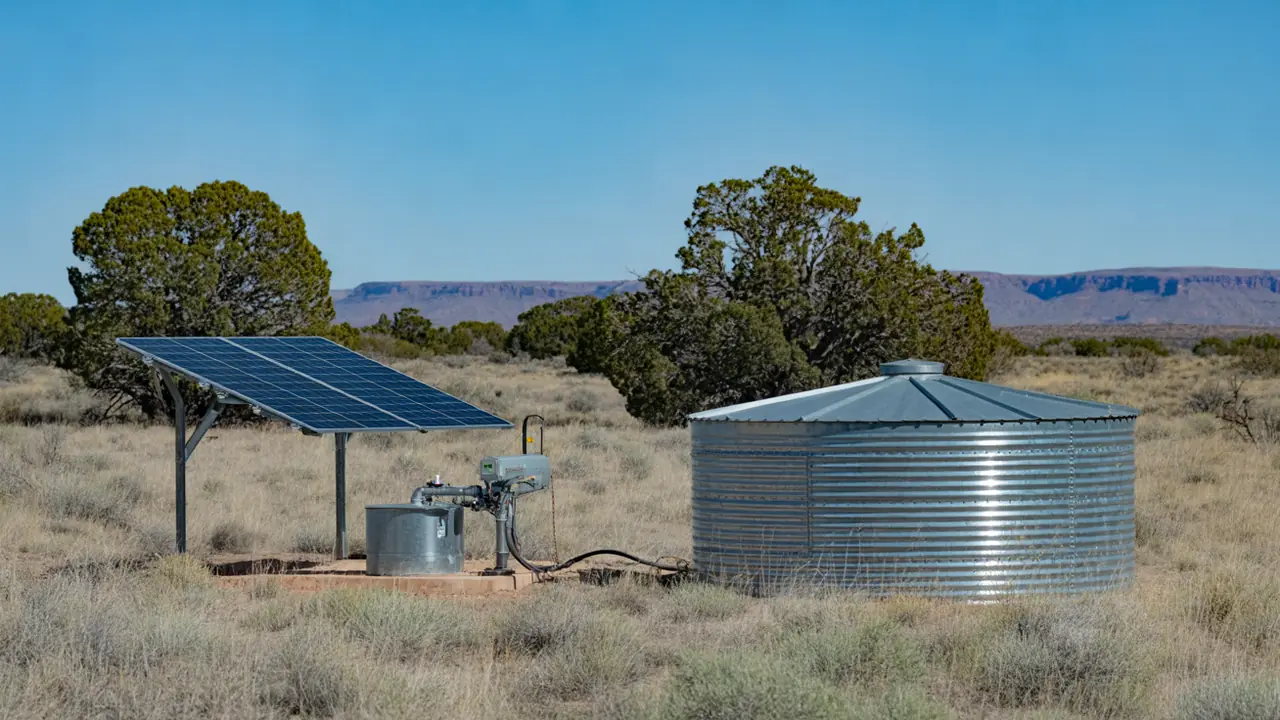
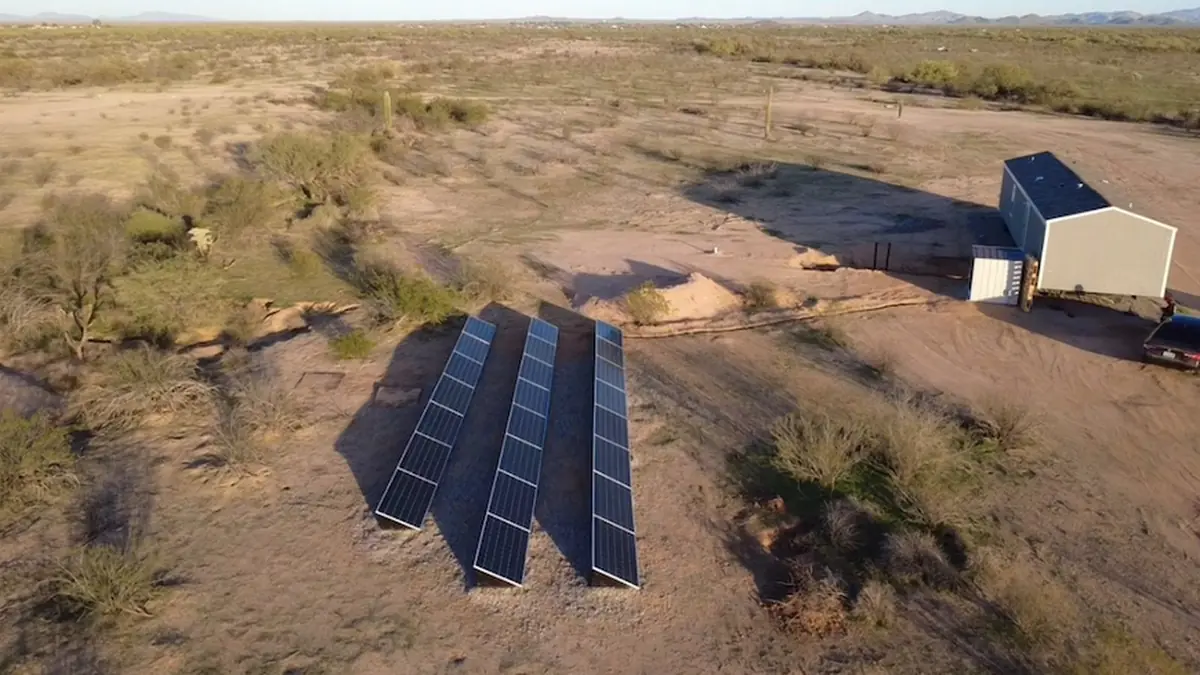
The simplest solar system there is drives a well pump. University of Arizona Cooperative Extension describes it in its solar PV water pumping factsheet: a solar module or array matched to a DC submersible pump, a pump controller, and no energy storage at all. The pump runs when the sun is on the panels and stops when it is not.
That suits a ranch or a rural home well. Demand for water rises with the heat, exactly when the sun is strongest, and the water pumped during the day is stored in a tank or cistern for later.
How big should the tank be?
The Extension factsheet gives a rule of thumb of three days of autonomy, meaning three days with no useful sun. Multiply the gallons you need per day by three: a site that needs 1,000 gallons a day would want a tank of at least 3,000 gallons.
Pressure comes from height. The same factsheet notes that every 2.31 feet of elevation creates 1 psi, so a tank on a hill or a stand can feed troughs or a house without a second pump, or a small pressure pump can take over at the house.
Sizing water storage for a solar well pump
Plan three days of storage for cloudy stretches: a site that needs 1,000 gallons a day wants at least a 3,000 gallon tank. Height makes pressure: every 2.31 feet of elevation adds 1 psi.
How is a solar well pump sized?
Two numbers drive the design. The first is daily water need. The second is total dynamic head, the equivalent vertical distance the pump must lift the water, including the depth to water in the well, drawdown while pumping, the rise to the tank and friction in the pipe. New Mexico State University's guide to designing solar water pumping systems walks through both and recommends a solar resource above 3 kWh per square meter per day, which most of Arizona clears easily.
The sun side is generous here: the Extension factsheet notes the Southwest typically receives five to six peak sun hours a day. Winter still matters, because the days are shorter and the sun is lower, so the array is sized for the lowest month you need water in.
Should the pump run on its own array or the home's battery?
| Direct-coupled solar pump | Pump on the home's battery system | |
|---|---|---|
| Storage | Water in a tank | Energy in the battery bank |
| Runs at night | No, the tank supplies water | Yes |
| Pump type | DC submersible matched to its array | Standard AC well pump or a DC pump |
| Design load | Its own array only | Inverter surge, daily run time in the battery and array sizing |
| Best for | Livestock, irrigation, a remote tank | A home that wants pressure on demand |
Many sites use both: a direct-coupled pump fills a tank, and the house runs a small pressure pump from its off-grid solar system. If you already have a grid-tied home with a well, putting the well pump on a home battery backup critical loads panel keeps water flowing in an outage, a common item on rural outage lists; see how big a battery backup system you need.
What well rules apply in Arizona?
The Arizona Department of Water Resources regulates all groundwater wells in the state. ADWR requires a Notice of Intent to drill before a new well is drilled, deepened or modified, and a licensed well-drilling contractor must do the work. A domestic exempt well is equipped to pump 35 gallons per minute or less. Changing the pump on an existing well does not change those rules, but a new or deeper well does.
What else should you plan for?
- A float switch in the tank tells the controller to stop when the tank is full.
- A safety disconnect between the array and the pump, and proper grounding.
- Dust and wind. Panels on open land collect dust and catch monsoon wind, so solid racking and a yearly check matter. Our guide to off-grid living in Arizona covers the rest of the site.
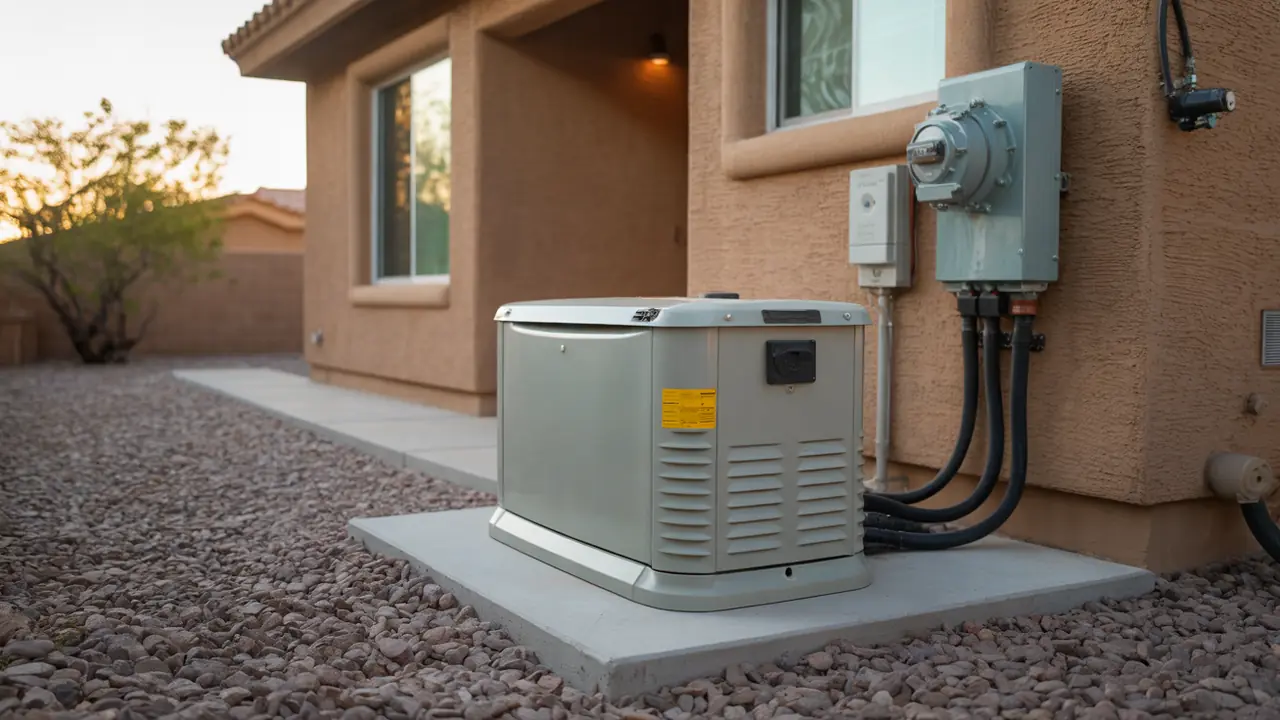
- A backup. A generator inlet on the home's system can run the pump during a long cloudy stretch; see generator vs battery backup.
What maintenance does a solar well pump need?
A solar pumping system has few moving parts above ground, but it is often far from the house and easy to forget. A simple routine:
- Keep the array clean. Dust cuts output, and a pump on its own panels pumps less water on a dirty array.
- Check the tank level control. A float switch or level sensor that sticks can run the tank dry or let it overflow.
- Look at the wiring and controller. Rodent damage and loose connections are common on remote sites.
- Watch the flow. A drop in water delivered on sunny days points to the pump, the well or the panels.
- Plan for cloudy stretches. Monsoon cloud cover is when tank storage and any battery or generator backup earn their place.
Power your well with the sun
Tell us about the well, the depth, how much water you need and whether the site has grid power, and a licensed electrician will lay out the solar and battery side of the system. Start with Build & Price, call (602) 704-4648, or send us a message.
Frequently asked questions
Does a solar well pump work without batteries?
Yes. A direct-coupled solar pump runs whenever the sun shines and fills a storage tank, and the tank carries you through the night and cloudy days. University of Arizona Cooperative Extension notes it is cheaper to store water than to store energy.
How big should the storage tank be?
A common rule of thumb from University of Arizona Cooperative Extension is three days of storage: multiply the gallons you need per day by three. A site that needs 1,000 gallons a day would want at least a 3,000 gallon tank.
Can my off-grid battery system run a regular well pump?
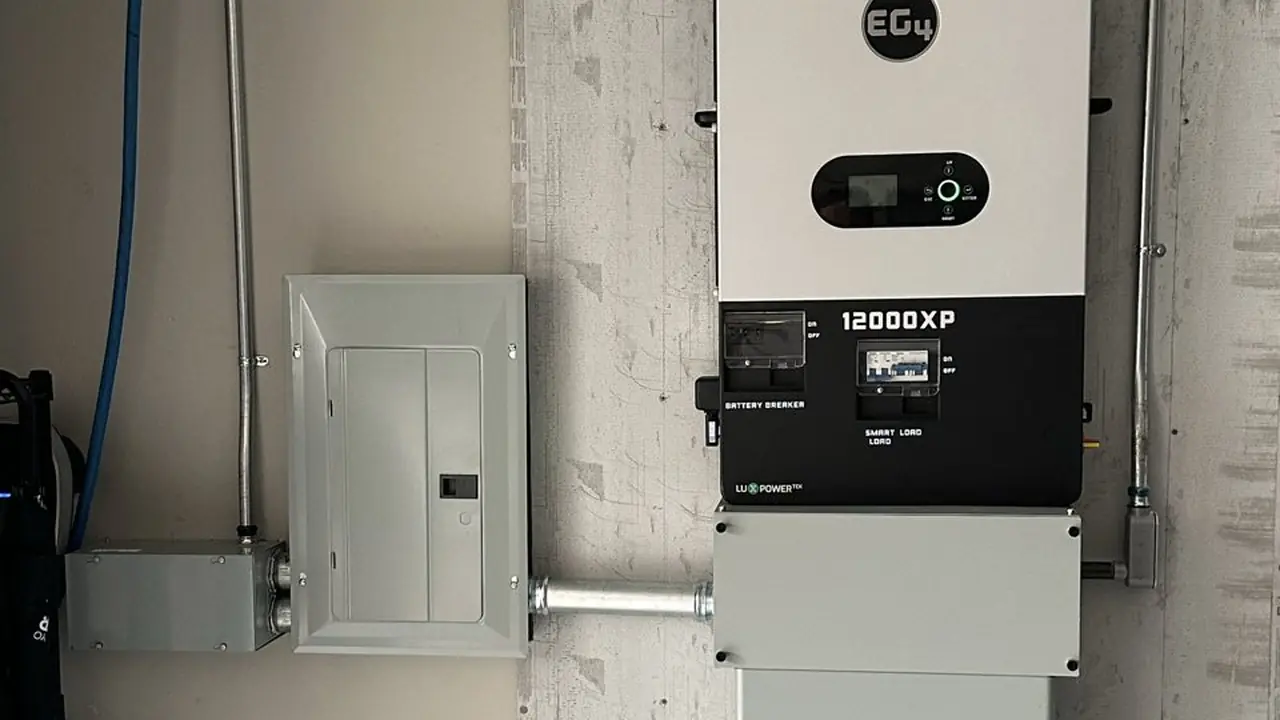
Yes, if the inverter is sized for the pump's starting surge and the battery bank and array are sized for its daily run time. Pump starts are often the largest moment of demand on an off-grid site.
Sources
- University of Arizona Cooperative Extension: A mobile solar PV water pumping demonstration system (AZ1956)
- New Mexico State University: Designing solar water pumping systems for livestock
- Arizona Department of Water Resources: Well drilling in Arizona
About the author
Nirvana Energy is an Arizona solar, battery and electrical contractor based in Gilbert, licensed and bonded under ROC 357597, CR-11 Electrical. Our own crews install off-grid solar and battery systems for rural land, ranches and cabins anywhere in Arizona. Learn more about Nirvana Energy.